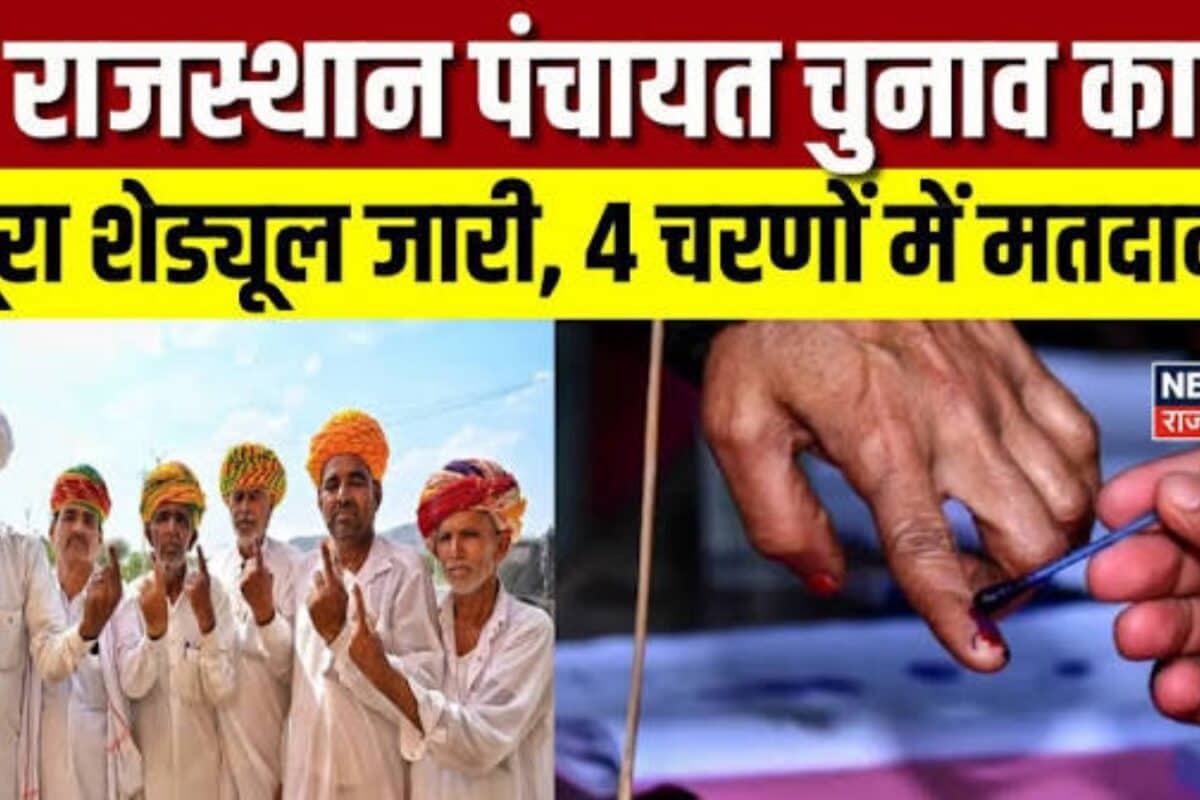
The State Election Commission of Rajasthan has officially released the comprehensive election schedule for the Panchayati Raj institutions general elections 2026. According to the formal announcement made by the commission, the mammoth democratic exercise will be conducted strictly in four distinct phases across the state. This announcement marks the commencement of a major electoral process that will shape grassroots governance and local leadership throughout rural regions.
Panchayati Raj elections hold immense historical and constitutional significance in strengthening the foundation of democracy in India and particularly in Rajasthan. These elections provide rural populations with direct administrative power to choose their local representatives for district councils, block committees, and village panchayats. Over the decades, these grassroots bodies have evolved into crucial pillars for implementing developmental schemes, poverty alleviation programs, and rural infrastructure projects at the micro-level.
As per the detailed timeline declared by the commission, voting for the district council and panchayat committee members is scheduled to take place on October 23, October 29, November 4, and November 14, 2026. Concurrently, the polling for the positions of village panches and sarpanches will be conducted on October 25, October 31, November 6, and November 16, 2026. This staggered voting schedule has been meticulously designed to ensure smooth administrative management, adequate security deployment, and efficient logistical coordination across all participating districts.
Local communities, aspiring political candidates, and rural stakeholders have already begun intense preparations as political activities gain rapid momentum in villages. Village elders, farmers, local merchants, and community leaders are actively discussing developmental issues, rural connectivity, water supply, and educational infrastructure. Stakeholders emphasize that these local elections directly influence daily civic amenities and grassroots accountability far more intimately than state or national legislative elections.
The administrative implications of this electoral announcement extend deeply into the regional economy and daily administrative functioning of local areas, including Kotputli-Behror. Local businesses dependent on rural trade, campaign material suppliers, and transportation services anticipate a temporary surge in economic activity. Meanwhile, local administrative offices are gearing up to manage the vast influx of nomination filings, scrutiny processes, and campaign regulation enforcement.
To maintain absolute fairness, transparency, and law and order, statutory oversight has been drastically intensified by district administrations. The immediate imposition of the model code of conduct following the election announcement restricts the misuse of public resources and ensures a level playing field for all contesting candidates. District magistrates and police authorities are coordinating closely to identify sensitive polling booths and deploy adequate security forces well in advance.
Looking forward, the procedural roadmap remains intensely active through the late autumn months of 2026. The counting of votes for district council and panchayat committee members is officially slated for November 20, 2026. Following this, the election for district chiefs and block pradhans will be held on November 25 and 26, concluding with the election of deputy district chiefs and deputy pradhans on November 27 and 28, 2026, marking the successful culmination of the entire democratic process.