
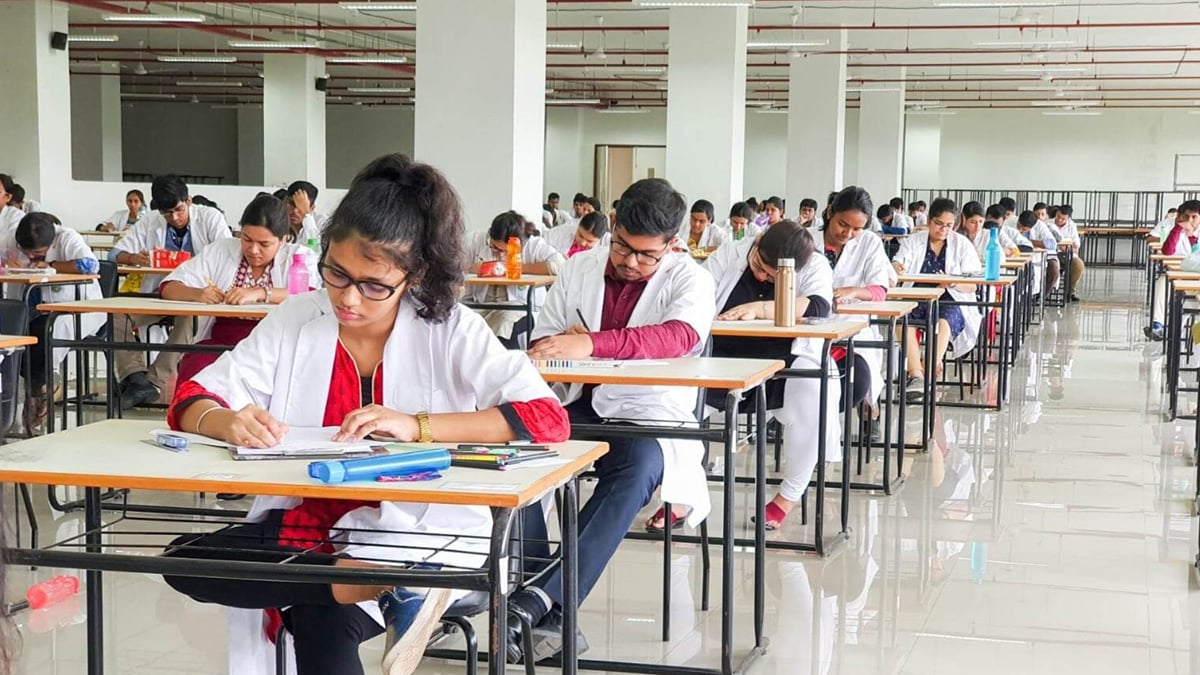
In a significant development concerning medical education admissions in Rajasthan, the stray vacancy round of the National Eligibility cum Entrance Test Undergraduate (NEET-UG) counseling process has officially concluded. A total of 1,064 candidates successfully secured seats across various medical institutions in the state during this final leg of allocations. This phase of admissions marks the culmination of a rigorous and highly anticipated counseling cycle that determines the academic future of numerous medical aspirants across the region.
The overarching backdrop of the NEET-UG counseling process involves intense competition, with lakhs of students vying for a limited number of medical seats nationwide. Over recent years, the disparity between the high volume of aspirants and the limited availability of seats in government and private institutions has continuously fueled intense debates regarding medical education accessibility. The stray vacancy round serves as the final institutional mechanism to fill any remaining vacant seats, ensuring that educational infrastructure is utilized to its maximum capacity.
A deeply scrutinized statistic emerging from this recent round highlights that an applicant holding a score of 177 marks and an expansive overall rank of 11.93 lakh managed to secure an MBBS seat in a private medical college. In sharp contrast, government medical colleges presented an extremely limited scope for aspirants in this final phase, with a mere six seats being allocated across state-run institutions. This stark numerical divergence underscores the heavy reliance on private infrastructure during the concluding stages of medical admissions in Rajasthan.
Educational analysts, parents, and student bodies have actively discussed the implications of such wide rank variations within the same professional academic ecosystem. While private institutions absorb candidates across diverse merit spectrums subject to institutional guidelines and fee structures, the scarcity of government seats continues to be a central point of deliberation. Stakeholders emphasize the need for greater transparency and balanced infrastructure growth to accommodate the soaring aspirations of youth entering the healthcare education sector.
Within the Kotputli-Behror district and the broader regional landscape of Rajasthan, these developments resonate deeply among families investing heavily in professional coaching and medical entrance preparations. The local economy and educational aspirations of students in semi-urban and rural pockets are inextricably linked to the outcomes of these counseling rounds. Parents and local academic circles continuously monitor seat matrix shifts, recognizing how institutional allocations dictate the future availability of healthcare professionals in local communities.
Administrative authorities overseeing the counseling proceedings have maintained that all seat allocations strictly adhere to established regulatory frameworks, merit lists, and category-wise eligibility norms specified by governing bodies. The orchestration of the stray vacancy round requires meticulous verification of documents, category quotas, and institutional reporting timelines to prevent discrepancies. Regulatory oversight ensures that every allocated seat complies with the legal and academic mandates governing undergraduate medical education in the state.
Looking ahead, the newly admitted candidates are slated to complete their formal institutional reporting, fee depositions, and academic enrollments to commence their rigorous MBBS curriculum. Educational planners and health department officials are expected to review the counseling data to refine future policy frameworks and address infrastructural imbalances. As these medical aspirants step into their professional training years, the broader academic community remains observant of how upcoming admission cycles will evolve across Rajasthan.
