
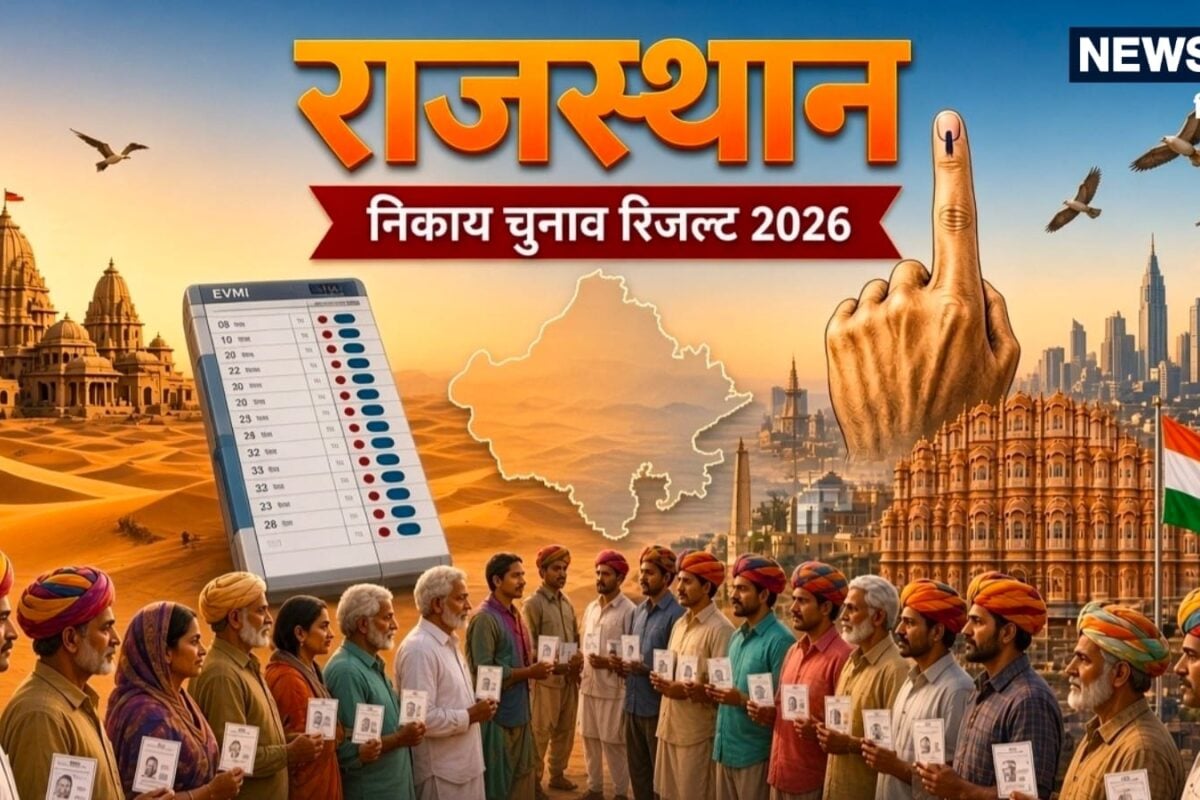
The Bharatiya Janata Party has officially emerged as the single largest political force in the recently concluded urban local body elections across Rajasthan, securing a dominant position in a fiercely contested electoral battle. According to the comprehensive results declared for the 309 urban local bodies in the state, the ruling political dynamics have shifted significantly, creating complex arithmetic for the formation of municipal boards and councils across multiple districts. While the party has registered impressive victories, the high-stakes electoral process has thrown up intriguing challenges in various municipal corporations, councils, and municipalities.
The historical context of these urban body elections underscores the deep political engagement and intense competition characteristic of Rajasthan politics, where urban electorates frequently shift loyalties between major political formations. Over the past several electoral cycles, urban local bodies have served as crucial barometers for grassroots political sentiment, reflecting changing socio-economic priorities, infrastructural demands, and local developmental expectations among urban residents. The current electoral battleground witnessed active participation from both the Bharatiya Janata Party and the Congress, alongside a formidable surge of independent candidates who managed to deeply penetrate traditional party strongholds.
A rigorous examination of the detailed numerical breakdown reveals the exact contours of the electoral mandate across the state. Out of the 10,205 wards where results have been officially declared, the Bharatiya Janata Party has secured victories in 4,167 wards, whereas the Congress party has won 3,603 wards. Significantly, independent candidates have captured a massive 2,265 wards, demonstrating their formidable local influence. Across the 10 major municipal corporations, the Bharatiya Janata Party secured clear majorities in 4 corporations, while the Congress managed a majority in 1 corporation. Crucially, in the remaining 5 municipal corporations, neither political party attained a clear majority.
The electoral complexity deepens further when analyzing the data concerning the 47 municipal councils across the state. Out of these 47 municipal councils, a staggering 28 councils have failed to give any single political party a clear majority, leaving the board formation entirely dependent on negotiations with independent councillors and smaller political entities. In contrast, the landscape in the 252 municipalities presented a more decisive outcome, with the Bharatiya Janata Party capturing 149 municipalities and the Congress party winning 95 municipalities, leaving a smaller margin for independent maneuverability in those specific administrative units.
The profound regional impact of these election results extends directly to local governance, municipal administration, and community development frameworks throughout Rajasthan, including key administrative zones such as Kotputli-Behror. Local trade associations, civic welfare societies, and community leaders have expressed keen interest in the outcome, emphasizing that stable municipal boards are essential for executing urban sanitation projects, infrastructural maintenance, and commercial licensing reforms. The fragmentation of mandates in several key municipal bodies has led to intense local deliberations regarding which faction or coalition can successfully deliver long-pending public works and community welfare schemes.
In response to the fragmented electoral outcomes, administrative machinery across the state has intensified preparations for the upcoming institutional procedures required for leadership elections. District administrations and election observers are ensuring that statutory guidelines and transparency protocols are strictly maintained as political parties engage in hectic parleys to secure the backing of independent councillors. The municipal election authorities have finalized security arrangements and logistical frameworks to ensure peaceful proceedings across all affected districts, maintaining strict adherence to electoral codes of conduct.
Looking ahead, the immediate political focal point shifts decisively toward the upcoming elections for mayors, municipal council presidents, and municipality chairpersons, which have been formally scheduled for September 21. As political managers from both major parties intensify their efforts to court the decisive independent councillors, the ultimate composition of the municipal leadership remains hanging in the balance. Public expectations run high as citizens await the final establishment of stable local governments capable of addressing pressing civic challenges and spearheading sustainable urban development in the months ahead.