
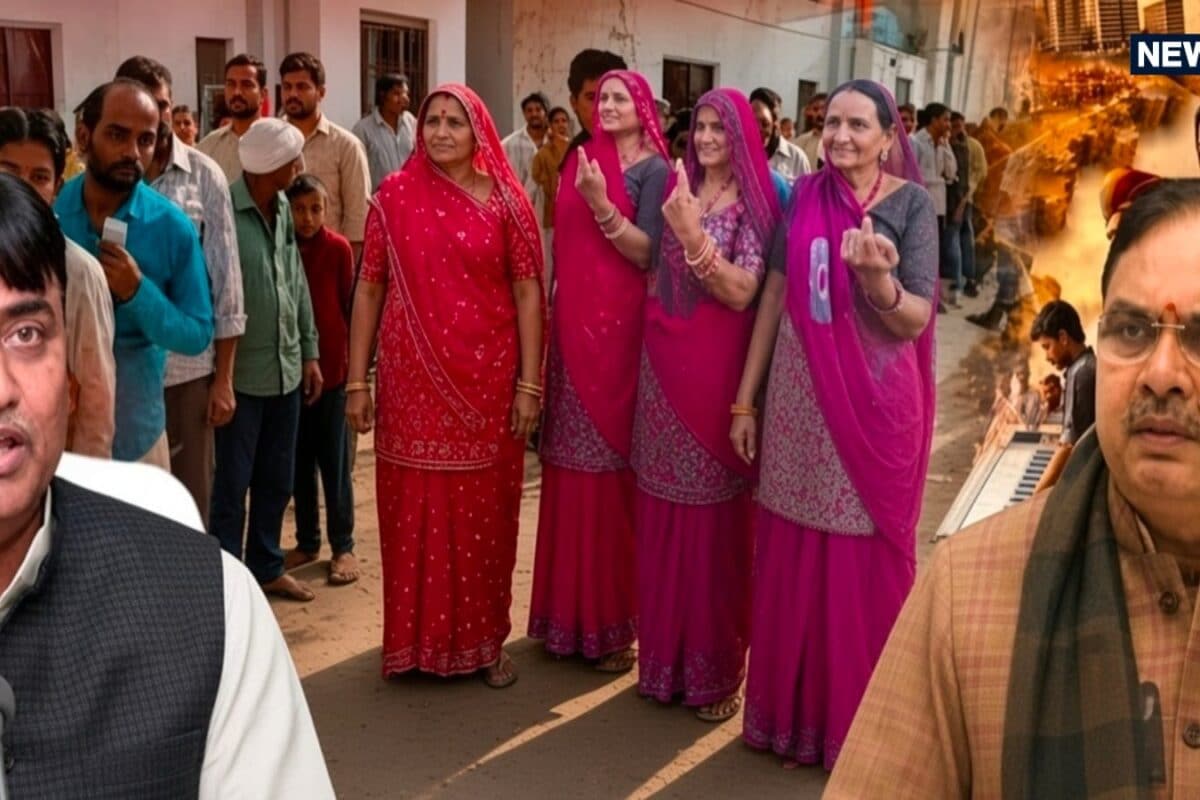
The political landscape of Rajasthan has witnessed a significant development following the resounding victory of the Bharatiya Janata Party in the recent municipal elections. This electoral triumph has not only altered the local administrative dynamics within the state but has also echoed powerfully in the national capital of Delhi, drawing attention from the highest echelons of political leadership.
The roots of this electoral contest trace back to intense campaigning cycles where the ruling political framework emphasized administrative stability and regional growth. The outcome has established a renewed mandate for the governing administration, validating the sustained political strategies deployed across various municipal jurisdictions throughout the region.
While specific empirical statistics regarding exact vote shares remain part of broader electoral analyses, the tangible outcome reflects a consolidation of voter support for the ruling party. The logistical coordination and extensive campaigning executed by party cadres across different districts played a foundational role in achieving this decisive electoral mandate.
Key stakeholders, including senior political figures and administrative heads, have evaluated the results as a referendum on current governance models. Discussions among prominent leaders have highlighted the alignment between regional aspirations and national developmental agendas, pointing toward strengthened administrative cooperation across all tiers of governance.
The resonance of these municipal results extends directly into communities across various districts, including areas akin to Kotputli-Behror, where local governance dynamics heavily influence daily civic life and regional commerce. Citizens and local observers continue to evaluate how these municipal shifts will translate into localized infrastructural enhancements and improved municipal service delivery.
Administrative machinery and regional authorities have maintained steady oversight throughout the electoral cycle, ensuring peaceful proceedings and adherence to statutory guidelines. Following the declaration of results, institutional mechanisms have shifted focus toward facilitating the smooth transition of power and the establishment of newly elected municipal bodies.
Looking forward, the political establishment anticipates leveraging this momentum for forthcoming administrative initiatives and developmental projects. The alignment between state policies and central guidance is projected to streamline policy implementation, fulfilling public expectations and addressing municipal infrastructure demands in the near future.