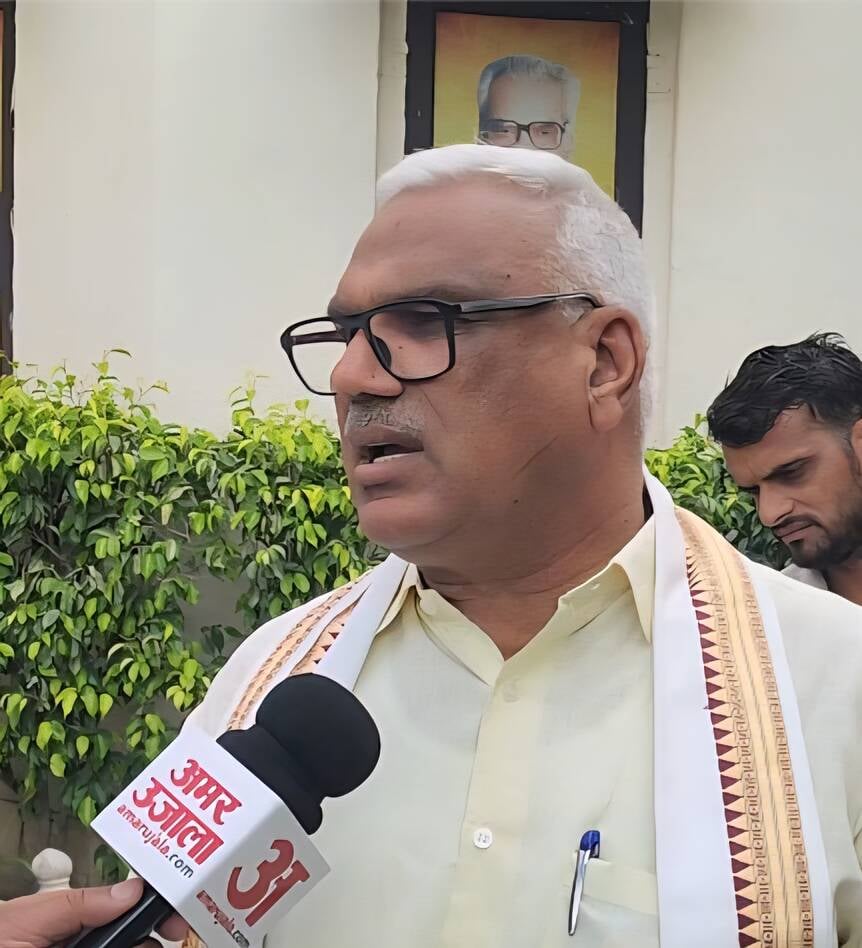
In a sharp and unsparing political escalation within the state of Rajasthan, Minister of State for Home Jawahar Singh Bedham has launched a direct and aggressive verbal assault on the main opposition Congress party, focusing heavily on its deepening internal factionalism and questionable leadership decisions. Highlighting the state of affairs within the opposition camp, the minister stated unequivocally that the Congress party has completely lost its wisdom, pointing to severe administrative and organizational disconnects.
Delving into the historical context and the origin of the current political friction, political analysts note that factional infighting has long plagued the grand old party in the region. The latest controversy erupted over the deliberate sidelining and neglect of senior and influential leaders within the party hierarchy, which has created widespread disillusionment among grassroots workers and loyalists who have dedicated decades to organizational growth.
Examining the ground reality of political realignments and strategic calculations, observers point out that the ongoing friction involves vital political stakes and leadership aspirations. While specific logistical figures and organizational metrics remain internal matters, the public fallout of these structural fissures directly impacts public morale, political alignments, and the overall stability of regional party networks across various districts.
Amplifying the gravity of the situation, the minister incorporated direct and compelling quotes during his media interaction, famously remarking that Congress has lost its collective wisdom. Furthermore, in a strategic overture aimed at disgruntled factions, the minister explicitly declared that the doors of the Bharatiya Janata Party remain wide open for all leaders and workers who feel suffocated and ignored within their current political setup.
Assessing the broader regional impact on local communities and administrative constituencies, such high-profile political sparring often influences public discourse and local governance priorities. Citizens, local traders, and community representatives closely monitor these shifting power dynamics, recognizing that intense party friction can sometimes overshadow pressing developmental agendas and local infrastructure demands.
Addressing the administrative responses and statutory oversight mechanisms relevant to political discourse, authorities maintain that freedom of political expression and critique remain fundamental pillars of a vibrant democracy. While administrative machinery operates independently of partisan politics, the rhetorical exchange between prominent political figures consistently captures the attention of institutional watchers and regulatory observers.
Looking toward the forward outlook and future political timeline, analysts anticipate heightened political maneuvering as parties prepare for upcoming electoral cycles and organizational restructuring. The public invitation extended by the ruling party leadership to opposition dissidents signals a concerted effort to expand political influence, ensuring that regional dynamics will remain volatile and fiercely competitive in the foreseeable future.