
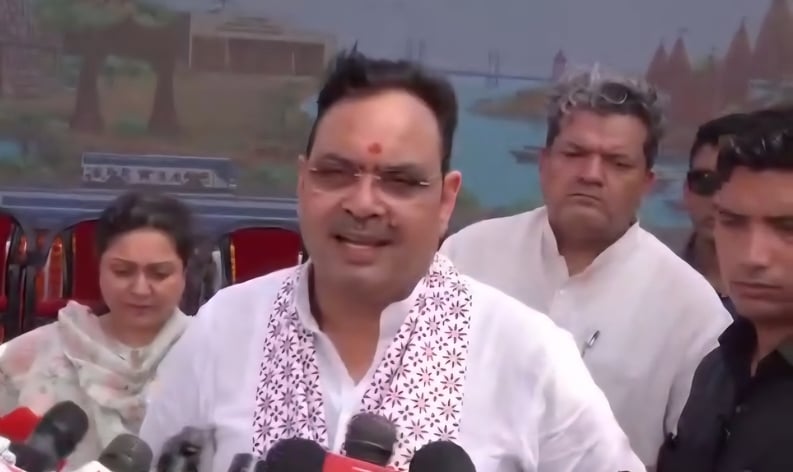
In a landmark policy restructuring aimed at transforming technical education and vocational training across Rajasthan, the state government has announced a comprehensive overhaul of government Industrial Training Institutes. Under this newly minted framework, industries will be granted a substantial 51 percent stake in the management and operational structure of these institutes. This structural integration is designed to align the curriculum directly with modern industrial requirements, ensuring that every student receives practical, job-oriented training rather than mere theoretical instructions.
The initiative finds its foundational roots in the visionary PM-SETU scheme, a national framework devised to synchronize skill development programs with actual market demands. Over the years, critics and industry leaders have repeatedly highlighted a persistent skill gap, wherein graduates emerging from traditional vocational institutes often lacked the hands-on expertise required on modern manufacturing floors. The state administration has therefore stepped forward to bridge this critical deficit by inviting industrial powerhouses to take the steering wheel in designing courses and managing institutional infrastructure.
A major financial milestone has already been achieved under this ambitious roadmap with the official sanction of 241 crore rupees specifically earmarked for the development and upgradation of the Bhiwadi industrial cluster. This heavy financial injection will be utilized to modernize machinery, establish advanced workshops, and create state-of-the-art training facilities that mirror contemporary industrial environments. The scale of investment underscores the seriousness of the administration in transforming regional hubs into powerhouses of skilled human capital.
Beyond the primary focal point of Bhiwadi, the bureaucratic machinery and administrative committees are actively scouting for robust industry partners across 11 other clusters throughout the state. Discussions with corporate leaders, manufacturing associations, and regional business chambers are currently in advanced stages to finalize public-private partnership pacts. Stakeholders have expressed optimism, noting that granting majority operational control to industries will naturally incentivize corporate houses to absorb trained youth directly into their workforce.
For regions surrounding Kotputli and neighboring industrial corridors, this structural transformation holds profound economic implications. Local youth who previously had to migrate to distant metropolitan cities for specialized training will now have access to high-standard technical education right at their doorsteps. The localized availability of industry-backed training centers is expected to catalyze localized employment, reduce youth unemployment rates, and foster a sustainable ecosystem of micro, small, and medium enterprises supporting larger manufacturing units.
Administrative oversight and regulatory mechanisms are being concurrently fortified to ensure transparency and accountability in the execution of these cluster partnerships. The Department of Skill, Employment and Entrepreneurship is closely monitoring the disbursement of funds and the adherence to quality benchmarks across all participating institutions. Periodic audits and performance reviews will be institutionalized to measure the employment placement success rate of each upgraded ITI unit, safeguarding public investments and student interests.
Looking ahead, the successful rollout of this 51 percent industry-stake model in Rajasthan is projected to serve as a replicable template for the entire nation. As the administration finalizes partnerships for the remaining 11 clusters and oversees the utilization of the 241 crore rupees in Bhiwadi, public expectations remain high. The ultimate success of this initiative will be judged by its ability to seamlessly transition young trainees from institutional classrooms directly onto gainful manufacturing and corporate floors.
