
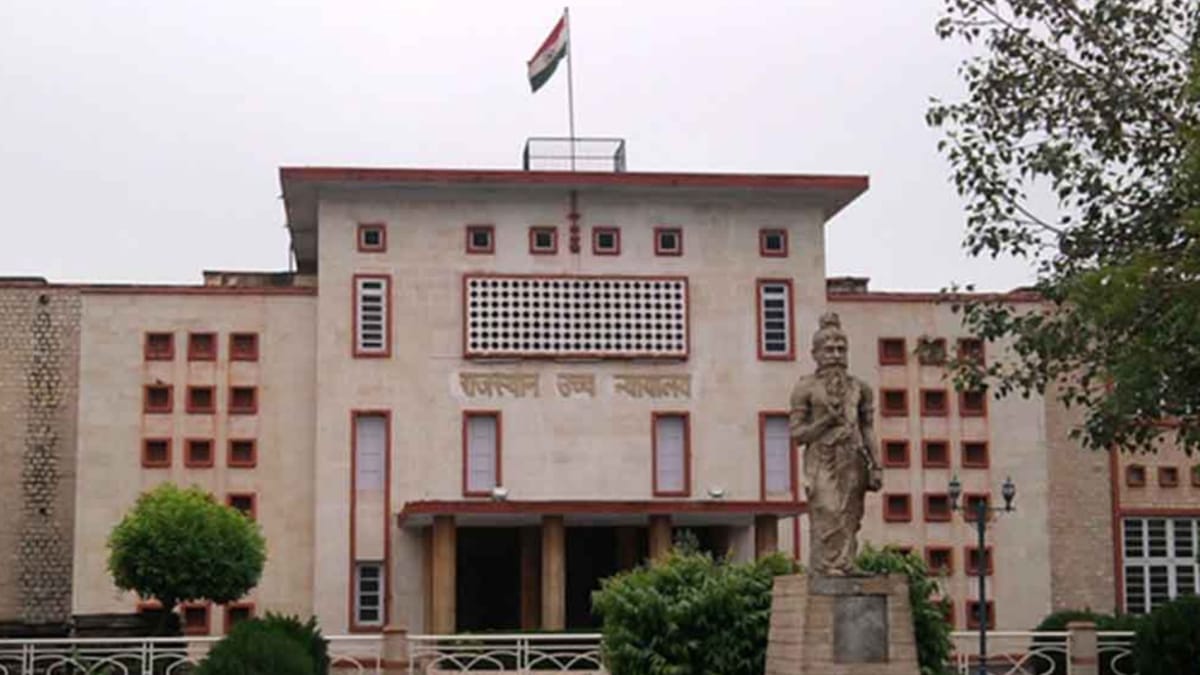
The Rajasthan High Court has dealt a significant blow to the ongoing recruitment drive by issuing an interim stay on the selection process concerning 1340 posts under the Ayush Officer Contract Recruitment 2025. This judicial directive halts the immediate progression of administrative appointments, bringing the entire recruitment mechanism to a temporary standstill across Rajasthan. The core controversy emerged when serious legal and procedural questions were raised regarding the fundamental structure of the selection methodology adopted by the recruiting authorities.
Providing deeper background to the unfolding controversy, the litigation originated from a formal petition submitted by Dr. Jyoti Jangid before the Rajasthan High Court. The petition meticulously challenged the administrative wisdom and statutory validity of consolidating diverse medical disciplines into a single framework. Specifically, the grievance addresses the contentious methodology wherein distinct medical practices were clubbed together for evaluation under a unified evaluation parameter, bypassing specialized disciplinary distinctions.
At the center of this administrative dispute are precisely 1340 posts earmarked for contract officers under the Ayush Officer Contract Recruitment 2025 initiative across Rajasthan. The financial and logistical stakes involved in this recruitment drive are immense, affecting thousands of qualified medical practitioners who have invested considerable time and resources into the application process. The creation of a unified merit list without accounting for the inherent pedagogical and clinical differences between the systems has triggered severe operational anxieties among candidates.
Voicing deep concerns over the selection criteria, medical associations, petitioner representatives, and legal counsels have strongly criticized the joint evaluation framework. Stakeholders argue that combining Ayurveda, Homeopathy, and Unani practitioners into a singular merit list fundamentally violates established administrative norms of fair competition and specialized qualification recognition. Doctors and aspirants maintain that each traditional medical branch possesses unique curriculum dynamics, clinical training, and therapeutic methodologies that cannot be weighed on a uniform comparative scale.
The administrative ramifications of this high-profile judicial stay extend directly to regional healthcare aspirants and district-level medical facilities, including those within the Kotputli-Behror region of Rajasthan. Local medical aspirants who prepared extensively for these 1340 contract posts now face profound uncertainty regarding their immediate professional futures. The local economy and community development sectors, which heavily rely on the timely deployment of qualified healthcare professionals to rural and semi-urban health centers, are similarly bracing for delays in workforce expansion.
In response to the interim order passed by the Rajasthan High Court, concerned state departments and recruitment boards are currently reviewing their legal options and administrative records. Statutory oversight bodies and medical boards are examining the technicalities of the joint merit list to formulate an appropriate legal defense or a revised administrative protocol. Officials are under immense pressure to rectify procedural ambiguities to ensure compliance with judicial observations without compromising the overarching goal of filling essential medical vacancies.
Looking ahead, the legal battle surrounding the Ayush Officer Contract Recruitment 2025 is expected to witness comprehensive hearings in the coming weeks before the Rajasthan High Court. The timeline for the resumption of the 1340 selection vacancies now entirely depends upon judicial scrutiny, expert committee evaluations, and potential structural revisions to the merit listing procedure. Public expectations remain focused on a transparent resolution that respects the specialized integrity of Ayurveda, Homeopathy, and Unani medical sciences while upholding merit-based recruitment principles.
