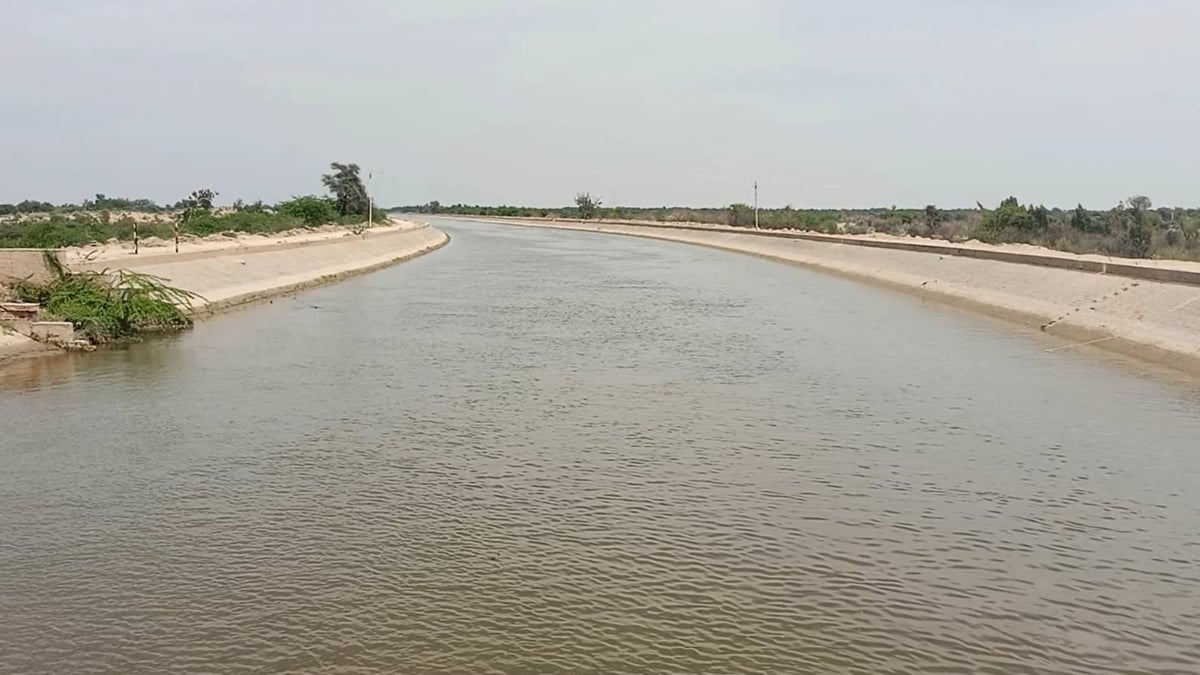
In a landmark developmental decision aimed at bolstering the agrarian economy and water infrastructure of the region, the Rajasthan Government has officially sanctioned a massive financial allocation of 1,274.26 crore rupees. This substantial funding is specifically designated for the ambitious expansion and infrastructural enhancement of the vital Indira Gandhi Canal Project, marking a transformative step forward in regional water management.
Historically, the Indira Gandhi Canal Project has served as the absolute lifeline for arid and semi-arid tracts of Rajasthan, converting barren stretches into fertile agricultural zones. Over successive decades, infrastructural maintenance and the creation of reliable water storage mechanisms have remained paramount concerns for successive state administrations, necessitating continuous upgrades to combat fluctuating weather patterns and irrigation challenges.
Under the newly approved administrative and financial framework, the state administration will construct four dedicated escape reservoirs. These four newly sanctioned storage facilities are engineered to collectively store an impressive total of 8,746 million cubic feet (MCFT) of water, substantially mitigating dry-spell vulnerabilities and ensuring uninterrupted water flow to targeted agricultural belts.
Farming communities, agricultural experts, and regional water resource analysts have overwhelmingly welcomed this decisive financial infusion. Representatives of cultivator unions emphasize that the augmentation of storage capacity through these four reservoirs will directly translate into timely irrigation, better crop yields, and heightened financial security for thousands of rural farming families.
While the primary geographical focus centers around the direct command areas of the canal, the broader economic ripples of such massive hydraulic undertakings invariably benefit neighboring districts and agricultural trading hubs throughout Rajasthan. Enhanced agricultural productivity naturally fuels local commerce, stabilizes rural employment, and strengthens the foundational economy of the entire state.
To ensure absolute transparency and meticulous execution, the administrative machinery, including the concerned engineering departments and regional planning boards, has been tasked with overseeing strict compliance and timely completion of the infrastructural works. Rigorous statutory oversight mechanisms will monitor the utilization of the 1,274.26 crore rupees to prevent delays and ensure uncompromised construction quality.
Looking toward the horizon, the successful realization of these four reservoirs carrying 8,746 MCFT of water is expected to commence through phased bureaucratic and technical clearances. Public expectations remain high as agricultural stakeholders anticipate a more resilient, drought-proof irrigation ecosystem that promises sustainable prosperity for generations to come.