
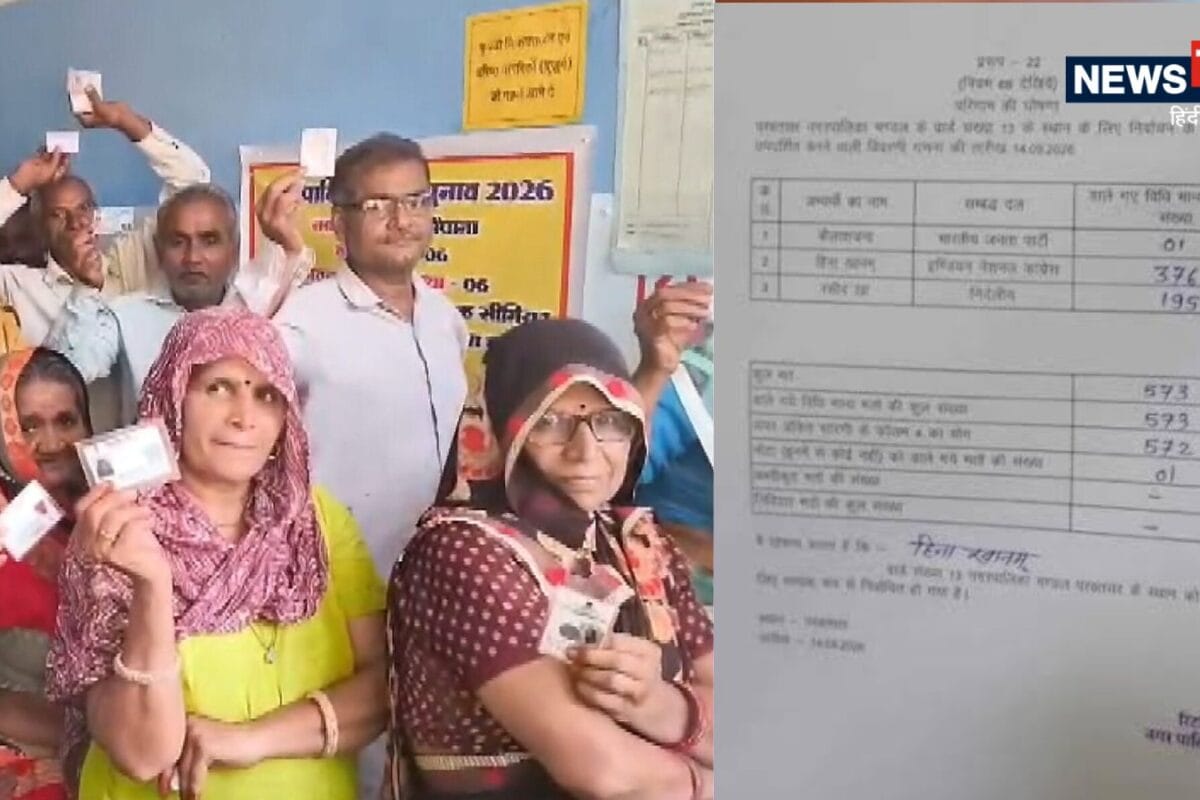
In an astonishing turn of events during the recent local body elections in Rajasthan, a municipality election result has emerged that has left political pundits and voters completely dumbfounded. The incident unfolded in ward number 13 of the Parbatsar municipality, situated within the Didwana-Kuchaman district, where the democratic process delivered a verdict of unprecedented proportions for a major political party.
The electoral contest, which typically witnesses intense campaigns, door-to-door canvassing, and high-stakes political maneuvering, concluded with a statistical anomaly that is rarely documented in modern Indian electoral history. The Bharatiya Janata Party had fielded Kailash Chandra as its official candidate from this specific ward, pinning high hopes on party loyalty, organizational backing, and the broader appeal of the ruling political formation.
However, the official counting of votes revealed a grim reality that shattered all pre-poll calculations and party expectations. When the ballot boxes and electronic voting records were tallied for ward number 13, the official tally showed that the Bharatiya Janata Party nominee, Kailash Chandra, had secured exactly one vote, leaving observers struggling to comprehend the exact dynamics of the local electorate.
Adding a layer of profound irony and personal tragedy to the political debacle, local reports and neighborhood discussions indicated that even the candidate's immediate family members, including his wife and his parents, allegedly did not cast their ballots in his favor. This aspect of the election outcome transformed a standard political defeat into a subject of intense public intrigue and widespread local discussion.
The ripples of this extraordinary election result have extended far beyond the immediate boundaries of the Parbatsar municipality, impacting political discourse across the entire Didwana-Kuchaman district and neighboring regions of Rajasthan. Party workers, local organizers, and senior leaders are now forced to re-evaluate their grassroots connectivity, campaign strategies, and internal feedback mechanisms to understand how such a massive disconnect could occur between a candidate and the voters.
Administrative authorities and election officials managed the polling and counting procedures smoothly without any reported technical glitches or law and order disturbances, ensuring complete transparency in the declaration of these startling figures. The district administration has maintained a neutral stance, focusing entirely on the successful completion of the broader municipal election schedule across the region.
As the dust settles on the Parbatsar municipal polls, this peculiar case of a solitary vote serves as a stark reminder of the unpredictable nature of grassroots democracy. Political analysts suggest that this incident will long be remembered as a classic study in local voter behavior, party alienation, and the stark realities that sometimes confront high-profile political candidates at the absolute grassroots level.