
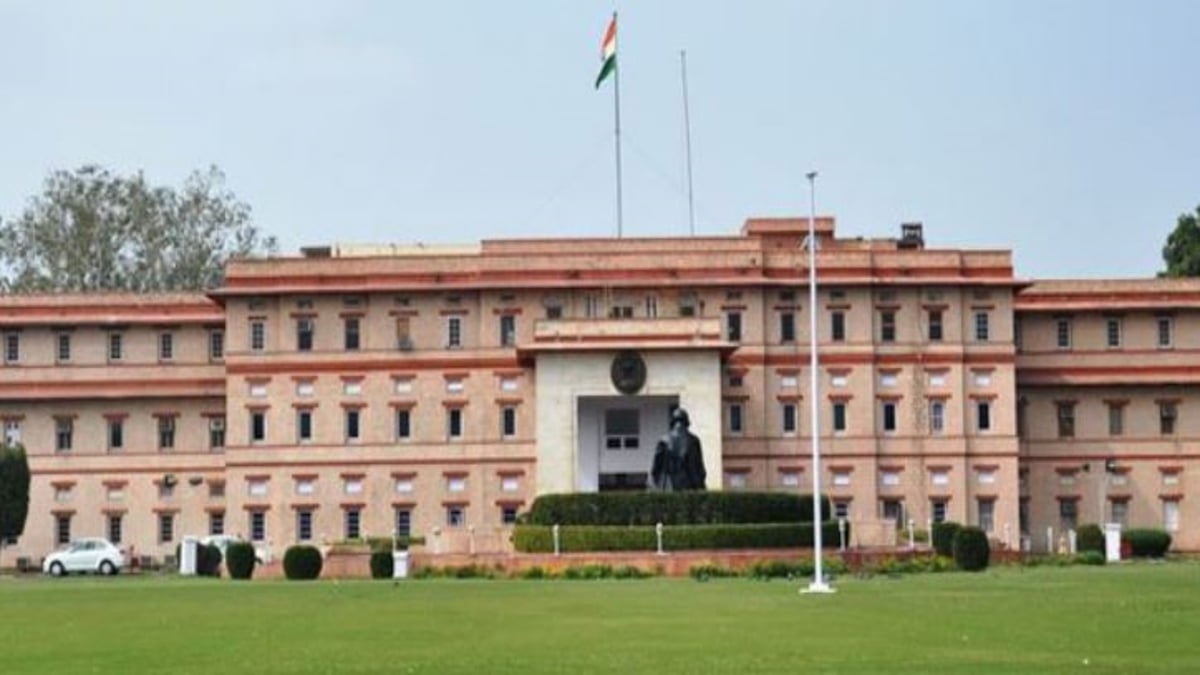
In the administrative landscape of Rajasthan, the placement of senior bureaucrats under APO (Awaiting Posting Orders) status remains a significant regulatory instrument utilized by the government. The recent administrative discussions surrounding Shikhar Agarwal have once again brought this institutional mechanism into the public domain. Such decisions are typically executed within the framework of state governance to manage bureaucratic transitions, pending inquiries, or administrative reorganizations.
A historical review of the state administration reveals that this is not an isolated occurrence affecting a single officer. Over the course of recent administrative developments, several key officials have encountered identical departmental statuses. The official records document a series of such transfers and reassignments that have shaped the operational dynamics of the state secretariat and allied departments over various legislative tenures.
Government records and administrative files from Rajasthan indicate a consistent pattern regarding such executive decisions. Before the recent developments concerning Shikhar Agarwal, multiple civil servants across different cadres were subjected to identical APO protocols. The list of these previously affected functionaries forms a significant part of the state's bureaucratic history, reflecting the rigorous nature of administrative oversight.
Among the prominent bureaucrats who faced similar administrative orders in the past are Nalini Kathotia, Ambarish Kumar, Lalit Goyal, Archana Singh, and Hanumanmal Dhaka. Each of these officials held notable responsibilities within various departments before being placed under APO status due to distinct administrative circumstances and departmental contexts prevailing at the respective times.
The implications of such administrative actions extend directly into the regional governance structures, including developing districts such as Kotputli-Behror. Whenever senior officials at the state headquarters undergo APO transitions, the departmental continuity, policy implementation schedules, and administrative supervision at the grassroots level experience noticeable adjustments. Local administrative machinery often requires adequate stabilization periods to adapt to leadership shifts originating from the state capital.
From an institutional perspective, the Department of Personnel acts as the central agency responsible for issuing these administrative directives. The statutory guidelines governing the civil services clearly outline the procedures for placing officers on Awaiting Posting Orders. These measures are deployed to maintain administrative integrity, ensure neutrality during departmental reviews, and facilitate smooth transitions within the governmental hierarchy.
As the state administration continues to navigate complex governance challenges, the reliance on APO protocols remains an established administrative practice. Observers of the Rajasthan civil services note that such decisions will continue to play a crucial role in maintaining bureaucratic accountability. The ongoing developments regarding these administrative actions are closely monitored by policy analysts and administrative experts across the region.
