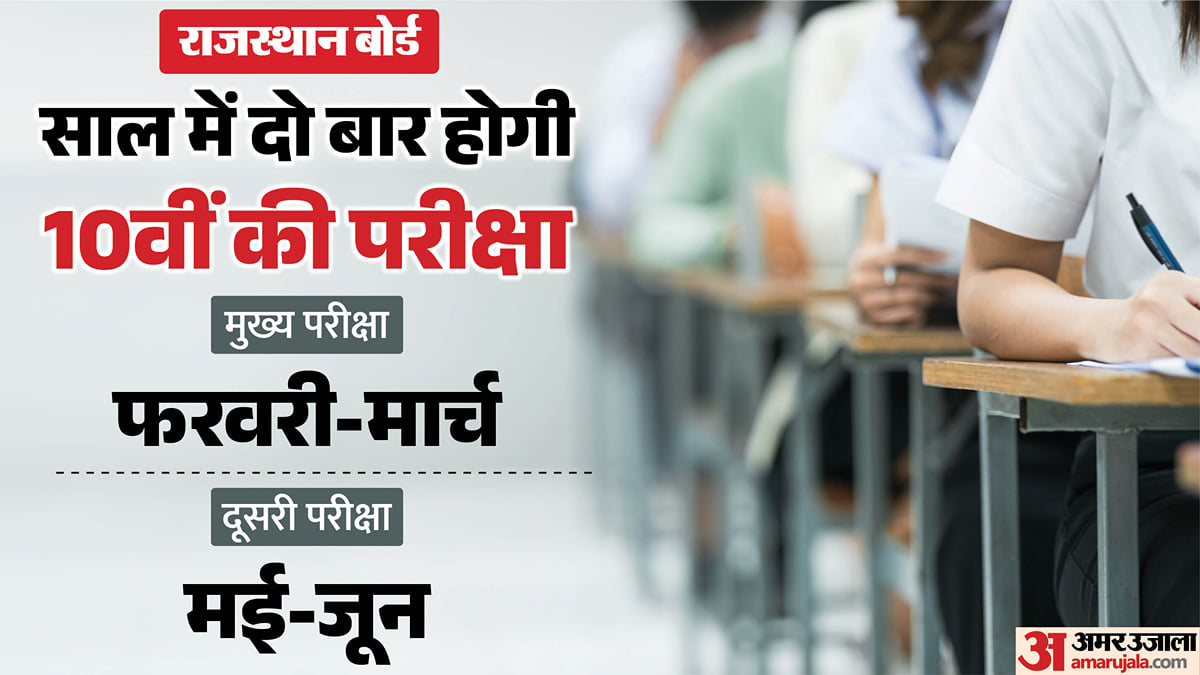
In a major structural transformation of the state educational framework, the Rajasthan Board has officially announced that Class 10 board examinations will now be conducted twice a year. This landmark decision is designed to alleviate intense academic pressure on young learners, mitigate examination stress, and provide a fair, stress-free secondary education landscape across the region. Educational administrators across Rajasthan have welcomed this progressive policy shift, which aligns regional evaluation standards with contemporary progressive pedagogical methodologies.
Historically, secondary school students in Rajasthan faced immense psychological and academic pressure during the annual board examinations, with a single high-stakes test dictating their immediate academic trajectory. The traditional system offered limited recourse for candidates who underperformed due to illness, anxiety, or unforeseen circumstances, often resulting in delayed academic progression through cumbersome supplementary examination procedures. Recognizing these systemic vulnerabilities, educational policymakers initiated comprehensive reviews of evaluation patterns to construct a more compassionate and robust assessment framework.
Under the newly structured guidelines, traditional supplementary examinations will be completely eradicated starting from the academic session 2026-27. Instead of relying on a single annual assessment, students will be granted a secondary testing window during the months of May and June. During this crucial second opportunity, candidates are permitted to appear in a maximum of 3 subjects for either score improvement or to successfully clear subjects in which they previously faced academic hurdles, thereby maximizing their overall academic potential.
Educational stakeholders, including school principals, senior teachers, and parent-teacher associations, have actively engaged in discussions regarding the practical implementation of this biannual examination model. Academic experts note that the inclusion of the 'best of two' rule will significantly safeguard students' career trajectories, ensuring that transient setbacks during the initial testing phase do not permanently jeopardize their higher secondary admissions or vocational aspirations. This administrative empathy bridges the gap between rigid evaluation and holistic student welfare.
Within regional districts such as Kotputli-Behror, local educational institutions and coaching academies are already preparing for the operational adjustments required by the 2026-27 transition. Local communities have expressed optimism, noting that students from rural and semi-urban backgrounds will particularly benefit from the reduced anxiety and the availability of a structured second attempt. Local economic stakeholders and stationery enterprises also anticipate steady academic engagement throughout the extended examination cycles.
Administrative machinery within the Rajasthan Board has initiated detailed logistical planning to manage the expanded examination calendar, encompassing secure question paper distribution, digital evaluation upgrades, and transparent result processing. District education officers are tasked with conducting extensive awareness seminars for educators and parents to ensure complete comprehension of the new rules, particularly the utilization criteria for the May secondary examination window and the calculation protocols for the 'best of two' policy.
Looking forward, the upcoming implementation of the biannual examination schedule in the 2026-27 academic session marks a decisive turning point in regional educational policy. As schools adapt their curricula and pedagogical approaches to prepare students for twin examination milestones, the overarching objective remains the reduction of student dropouts and the enhancement of academic competency across all demographic segments in Rajasthan.