
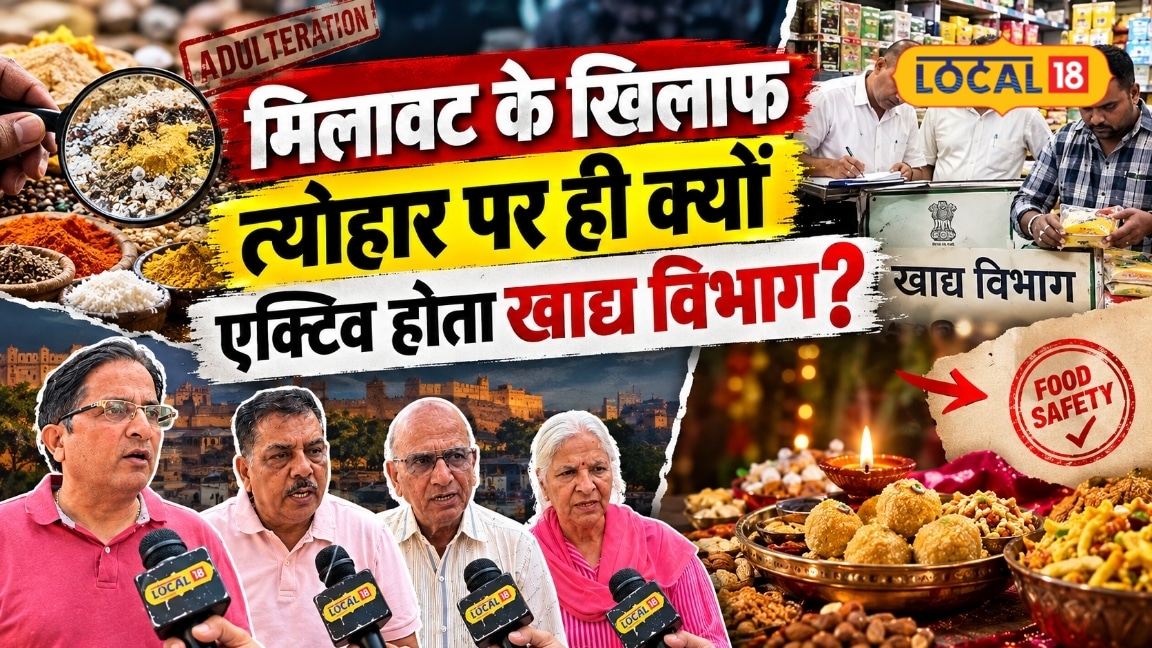
A growing wave of public discontent and skepticism has gripped the state of Rajasthan, with citizens openly questioning the efficacy and timing of anti-adulteration drives. The core issue revolves around the widespread public perception that enforcement agencies only activate their machinery during major festivals, leaving consumers vulnerable to contaminated food items for the rest of the year. This sentiment has sparked widespread debates regarding food safety, public health, and regulatory diligence.
On the ground, particularly in regions like Pali, everyday consumers find themselves facing profound anxieties concerning the safety of basic kitchen staples. Essential items that form the cornerstone of daily nutrition—namely milk, curd, and various traditional sweets—are increasingly suspected of being compromised with synthetic additives, inferior fats, and hazardous chemicals. The logistical challenge of monitoring every local vendor, dairy farm, and sweet mart without a continuous surveillance mechanism leaves millions of households exposed to health hazards.
Expressing their profound dismay, local community members and consumer rights advocates in Pali have raised critical questions regarding the operational calendar of the food department. Citizens emphasize that human consumption of dairy and confectionery products is a year-round necessity, not a phenomenon restricted to religious or cultural celebrations. Consequently, the public narrative strongly challenges the rationale behind sporadic administrative interventions rather than sustained vigilance.
The resonance of this issue extends across various regional districts, touching upon the broader socio-economic fabric of communities where local markets dictate daily sustenance. In regions like Kotputli-Behror and neighboring administrative zones, the local economy relies heavily on small-scale vendors and cooperative dairies. When enforcement remains inconsistent, it not only jeopardizes consumer health but also creates an unfair competitive environment for honest traders who adhere strictly to quality standards.
Administrative oversight currently relies heavily on targeted raids, sample collection, and laboratory testing during high-demand periods. While these measures temporarily deter blatant violations, critics and public representatives argue that structural reforms are urgently required. The statutory obligations of the food department mandate uninterrupted consumer protection, necessitating a paradigm shift from reactive firefighting to proactive, unannounced inspections across all 365 days of the calendar year.
Looking forward, the mounting pressure from the populace of Rajasthan and Pali has placed the food department under intense scrutiny. Public expectations are clear: administrative authorities must transition from festival-centric operations to an institutionalized framework of continuous accountability. Ensuring food safety 365 days a year is no longer viewed merely as a regulatory option, but as an indispensable prerequisite for safeguarding public health and restoring faith in governmental oversight.
