
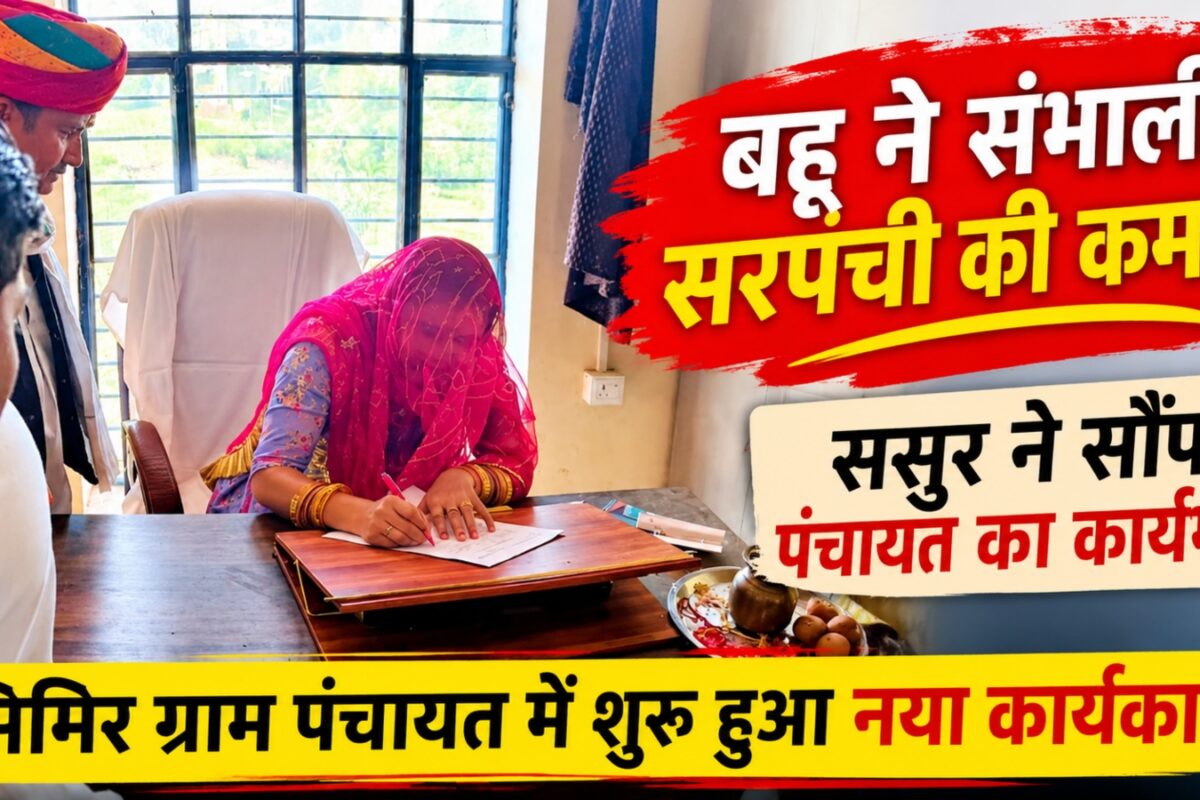
In a notable local governance development within the Karauli district of Rajasthan, an official transition of mayoral responsibilities has taken place in the Simir Gram Panchayat. Outgoing leader Rajendra Singh has formally handed over the leadership command of the local body to his newly elected daughter-in-law. This transfer of administrative authority marks a significant milestone in the democratic representation of the rural jurisdiction, capturing the immediate attention of political observers and rural communities alike across the region.
The administrative shift unfolded within the Saporata sub-division, where Simir Gram Panchayat holds strategic importance for regional local governance and grassroots development. Historically, Rajendra Singh managed the affairs, infrastructure planning, and public welfare initiatives of the area. The decision to pass the baton to his newly elected daughter-in-law introduces a fresh generational dynamic to the local administrative framework, reflecting evolving patterns in rural political leadership and family representation within local bodies.
As the newly installed leader assumes office, the local populace and community members are keenly observing the operational transition. The scope of responsibilities transferred includes routine municipal management, overseeing ongoing rural development schemes, and executing critical infrastructural decisions that directly impact the daily lives of the inhabitants within the Simir Gram Panchayat jurisdiction. The logistical and administrative stakes remain high as the new leadership steps into a role traditionally dominated by veteran local figures.
Stakeholder perspectives across the Saporata sub-division reflect a mix of cautious optimism and intense scrutiny. While community elders and local political analysts acknowledge the legitimate democratic mandate secured by the newly elected daughter-in-law, citizens and local merchants emphasize the pressing need for transparent governance, equitable resource distribution, and uninterrupted continuation of essential public services under the new administration.
The wider implications of this leadership handover extend throughout the surrounding regional administrative zones of Karauli district. Local governance patterns are increasingly subjected to public evaluations, setting precedents for how familial and political successions are perceived and implemented at the grassroots level. The regional community remains invested in ensuring that the transition translates into robust developmental outcomes rather than administrative stagnation.
On the administrative and statutory front, local government officials and revenue authorities are closely monitoring the procedural compliance of the handover. Statutory oversight ensures that all financial delegations, asset registers, and administrative powers are transferred in strict accordance with the prevailing Panchayati Raj guidelines and state municipal regulations. Official support and monitoring mechanisms remain active to facilitate a seamless operational switch.
Looking toward the future, the tenure of the newly appointed leader in Simir Gram Panchayat is expected to face rigorous public evaluation in the coming months. Upcoming procedures will involve finalizing annual budgets, prioritizing rural infrastructure projects, and addressing long-standing civic grievances. Public expectations are substantial, and the success of this administrative transition will ultimately be measured by tangible improvements in local governance and community welfare.
