
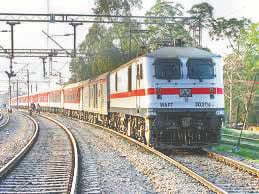
The railway administration has officially announced the introduction of a brand new weekly train service connecting Santragachi and Khatipura, serving the Jaipur region. This strategic infrastructural development has been designed to meet the growing transportation demands of passengers traveling across these vital sectors, ensuring enhanced connectivity and improved mobility for thousands of daily commuters and long-distance travelers alike.
The historical context of this route highlights a persistent demand from regional travelers and trade bodies for direct, reliable rail connectivity between eastern and western corridors. Over the years, passenger traffic along this corridor has witnessed exponential growth, necessitating a structured intervention by the railway authorities to alleviate congestion on existing routes and provide a dependable travel alternative.
Logistically and operationally, the newly introduced train is well-equipped to handle substantial passenger volumes. The service will officially commence operations on November 4 from Santragachi, followed by its maiden return run from Khatipura on November 6. The train formation comprises an impressive total of 22 coaches, ensuring adequate seating and passenger capacity, while scheduled stops at 23 intermediate stations will facilitate local boarding and alighting across diverse districts.
Local business leaders, commuter associations, and trade representatives have warmly welcomed the announcement, emphasizing that the multi-station connectivity will greatly benefit commercial exchanges and tourism. Stakeholders have pointed out that the inclusion of 23 designated halts guarantees vital accessibility for semi-urban and rural populations situated along the railway corridor, bridging critical connectivity gaps.
From a regional perspective, the introduction of this weekly service is expected to significantly boost economic activity, trade, and cultural integration. Communities residing in regions contiguous to Jaipur and neighboring districts stand to gain immensely from the seamless logistical movement of people, small-scale traders, and families visiting relatives across state lines, thereby reinforcing regional development.
Administrative oversight and operational planning are being meticulously managed by the railway authorities to ensure punctuality, passenger safety, and high standards of onboard service. Senior railway officials have confirmed that all technical clearances, scheduling protocols, and infrastructural alignments have been successfully completed in preparation for the upcoming inaugural runs.
Looking ahead, the railway administration remains committed to monitoring the occupancy rates and operational efficiency of this weekly service. Public expectations are notably high, and depending on passenger demand and infrastructural capacity, future scheduling adjustments or frequency enhancements may be considered to further optimize this important rail corridor.
