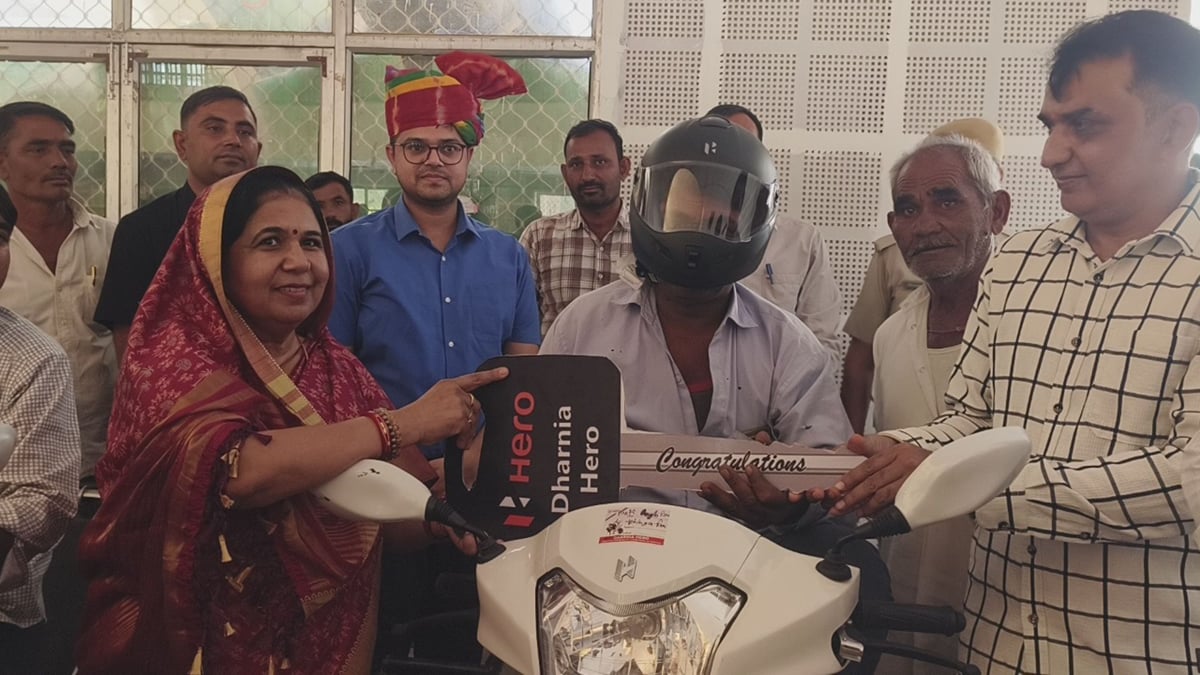
In an inspiring display of commitment to social welfare and inclusive development, a special distribution ceremony was organized in Nagaur, bringing immense joy and renewed hope to the faces of several differently-abled individuals. The event marked a crucial milestone in empowering marginalized citizens, as the administration rolled out concrete measures to bridge mobility gaps within the region.
The initiative found its foundational strength in the strategic utilization of legislative resources, specifically channeled to address the long-standing transportation challenges faced by persons with disabilities residing across the local jurisdiction. Accessibility remains a paramount challenge in rural and semi-urban landscapes, making reliable personal transportation an absolute necessity rather than a mere convenience.
At the center of this welfare drive was the formal distribution of exactly 16 specially equipped scooties, meticulously sanctioned under the MLA fund specifically designated for the Jayal Legislative Assembly constituency. Each of these vehicles has been engineered to provide maximum safety, comfort, and independent mobility to individuals with specific physical challenges, enabling them to commute for work, education, and daily chores without dependency.
Presiding over this momentous occasion, Minister of State Dr. Manju Baghmar interacted directly with the beneficiaries, listening attentively to their personal accounts of struggle, resilience, and aspirations. Her presence reinforced the government's resolve to ensure that welfare schemes percolate down to the most deserving grassroots recipients, fostering a culture of empathy and administrative responsiveness.
The broader regional impact of this intervention extends far beyond individual convenience, positively influencing the socio-economic fabric of communities across the Nagaur region. Enhanced mobility translates directly into better educational attainment for youth, improved access to employment opportunities, and greater participation in community life for citizens who were previously confined to their homes due to lack of transport.
Administrative machinery in Nagaur worked in close tandem with elected representatives to streamline the identification, verification, and final allocation processes, ensuring absolute transparency and merit-based distribution. Officials reaffirmed their commitment to maintaining rigorous oversight in executing similar welfare projects, ensuring that no eligible citizen is left behind in accessing state-supported benefits.
Looking ahead, community stakeholders and local administrators anticipate an expansion of such mobility enhancement programs in the upcoming financial cycles. With the successful rollout of these 16 scooties, the momentum for progressive disability-inclusive governance in Nagaur has been significantly reinforced, setting a commendable benchmark for regional public service delivery.