
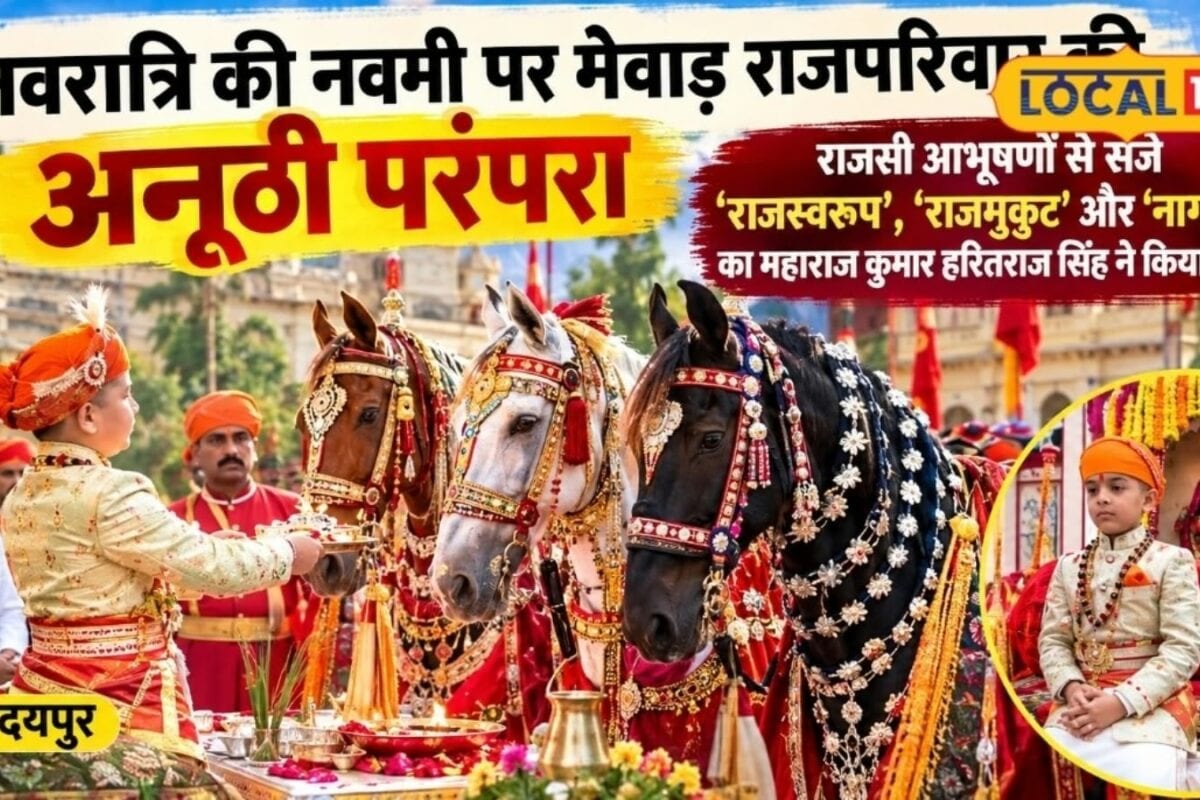
In strict adherence to centuries of rich heritage, the historic Mewar royal family of Udaipur observed its traditional horse worship ritual with immense religious fervor and traditional grandeur on the auspicious occasion of the ninth day of Sharad Navratri. This annual observance serves as a powerful reminder of the valor, sacrifice, and deep cultural roots that have defined the region for generations, maintaining a direct continuity with the martial history of Mewar.
Historically, horses have played an indispensable role in the military campaigns, defense, and statecraft of the Mewar rulers, often standing shoulder to shoulder with legendary warriors on blood-soaked battlefields. The continuation of this specific ritualistic worship bridges the ancient past with the modern era, ensuring that the legacy of loyalty and equestrian excellence remains alive in the public consciousness and the royal household alike.
The central ceremonies of this deeply symbolic day unfolded precisely within the historic confines of the Shambhu Niwas courtyard in Udaipur, a venue steeped in architectural splendor and royal history. During these proceedings, exactly three specially selected and impeccably groomed horses—namely Rajswaroop, Rajmukut, and Nagraj—were presented for the sacred rituals, highlighting the meticulous care and reverence bestowed upon these noble animals.
Presiding over the sacred proceedings, Maharaj Kumar Haritraj Singh Mewar meticulously performed the religious rites amidst the resonant chanting of Vedic mantras by traditional priests. The atmosphere within the courtyard was charged with spiritual devotion and historical reverence, as priests and royal attendants synchronized their actions to honor the majestic animals according to age-old protocols.
Prior to the main offerings, the magnificent horses were adorned in elaborate royal attire and traditional decorations, reflecting their esteemed status within the royal household. Symbolic offerings including akshat, kumkum, and fresh floral garlands were respectfully applied and offered to Rajswaroop, Rajmukut, and Nagraj by the participating dignitaries, marking an expression of divine grace and auspiciousness.
Following the formal worship and traditional aarti, the ceremonial proceedings concluded with the presentation of nourishing feed, fine garments, and auspicious jowar sprouts to the animals. This careful feeding ritual signifies the welfare, health, and dignity accorded to the horses, reinforcing the principle that those who served the state with loyalty deserve utmost care and respect.
Beyond the immediate religious observance, this enduring tradition carries profound cultural significance for the entire region, serving as an educational anchor for younger generations regarding the values of bravery, unyielding loyalty, and preservation of ancestral heritage. The event successfully reinforces the historical identity of Mewar, ensuring that the timeless bonds between the rulers, their trusted animals, and the community remain unbroken for years to come.
