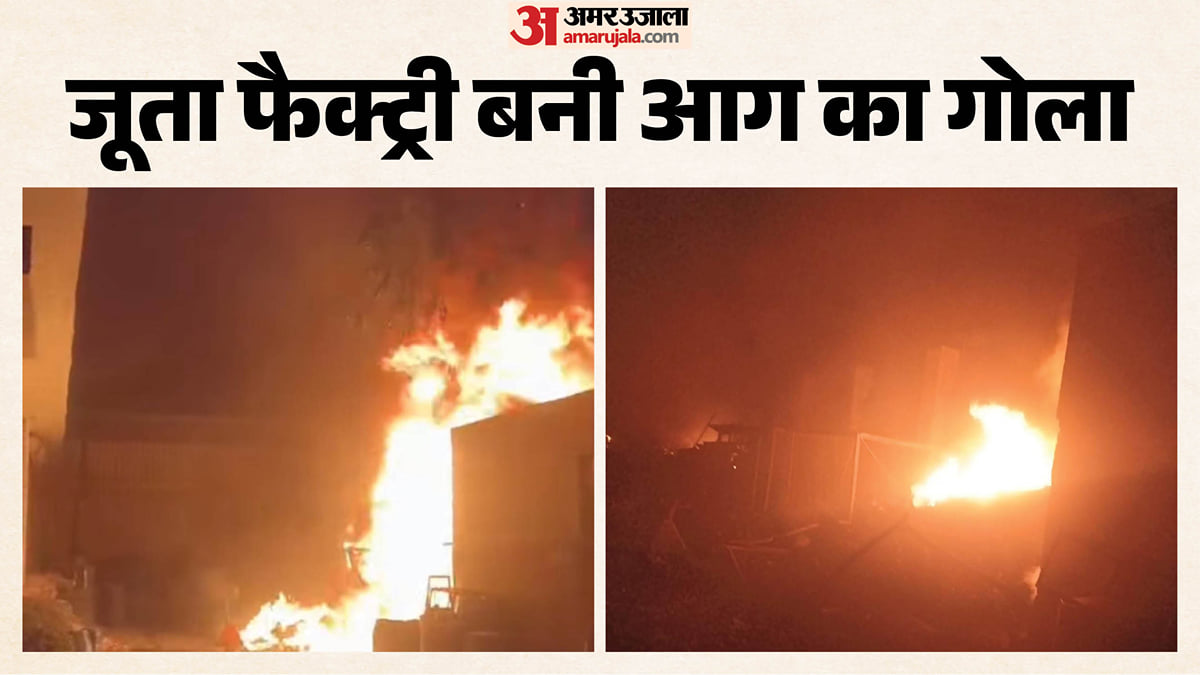
A devastating fire broke out late Wednesday night at DEIEM INDIA PVT. LTD., a major footwear manufacturing establishment situated in the prominent industrial hub of Bhiwadi within the Alwar district of Rajasthan. The sudden and ferocious outbreak of flames quickly engulfed large sections of the production unit, creating a perilous situation that demanded an immediate and coordinated emergency response. As the disaster unfolded in the darkness, towering columns of thick, black smoke billowed high into the atmosphere, visible from several kilometers away and immediately alerting authorities to the severity of the industrial accident.
The incident occurred specifically at plot E-133 within the bustling Bhiwadi industrial zone, an area known for its dense concentration of manufacturing units, warehouses, and commercial enterprises. Historically, this industrial corridor has been a vital engine of regional economic growth, housing numerous production plants that employ thousands of workers. However, the high concentration of industrial activity also brings inherent operational vulnerabilities, necessitating strict adherence to fire safety protocols and emergency preparedness measures across all operational facilities operating within the municipal boundaries.
According to preliminary reports from the ground, the blaze escalated rapidly due to the highly combustible nature of materials typically found within footwear manufacturing plants, including synthetic polymers, rubber compounds, adhesives, and finished goods storage. The immense heat generated by the fire threatened neighboring industrial plots, raising serious concerns about the potential containment failure of hazardous materials. While emergency assessment teams continue their on-site inspections, the logistical challenges of navigating heavy industrial lanes during a nocturnal crisis tested the readiness of local disaster response units to their absolute limits.
In the wake of the disaster, local trade associations, factory owners, and residents from surrounding residential pockets expressed profound concern over industrial safety standards. Eyewitness accounts detailed the harrowing moments when the alarm was first raised, compelling night-shift workers to evacuate the premises in an orderly yet urgent manner. Stakeholders have increasingly called for transparent safety audits and rigorous enforcement of statutory fire prevention guidelines to safeguard both human lives and substantial capital investments deployed across the industrial belt.
The reverberations of this industrial disaster extend directly into the broader regional economy, deeply impacting the Kotputli-Behror district and surrounding commercial networks. Many workers commuting daily from neighboring rural and semi-urban communities find their livelihoods temporarily or permanently disrupted by such unforeseen catastrophes. Local markets and ancillary supply chain partners also experience immediate economic friction, highlighting the interconnected vulnerability of regional industrial ecosystems when core manufacturing units suffer catastrophic damage.
Prompt administrative action followed the initial distress calls, with local civil authorities, police contingents, and municipal disaster management teams mobilizing swiftly to secure the perimeter. Multiple fire tenders from different stations were deployed in a synchronized effort to encircle the burning structure and deploy water cannons from strategic vantage points. Officials oversaw crowd control measures to prevent curious onlookers from obstructing the movement of heavy emergency vehicles, ensuring uninterrupted access for fire suppression personnel battling the hazardous flames.
Looking ahead, the primary focus transitions toward conducting a thorough forensic investigation to ascertain the exact root cause of the fire at DEIEM INDIA PVT. LTD. and evaluating the full extent of structural and material losses. Authorities are expected to mandate comprehensive compliance reviews for all industrial units in the E-133 vicinity and broader Bhiwadi sectors to prevent any recurrence of such hazardous incidents. Public expectations remain focused on strict accountability, transparent reporting of findings, and the implementation of enhanced infrastructural safeguards for the entire industrial community.