
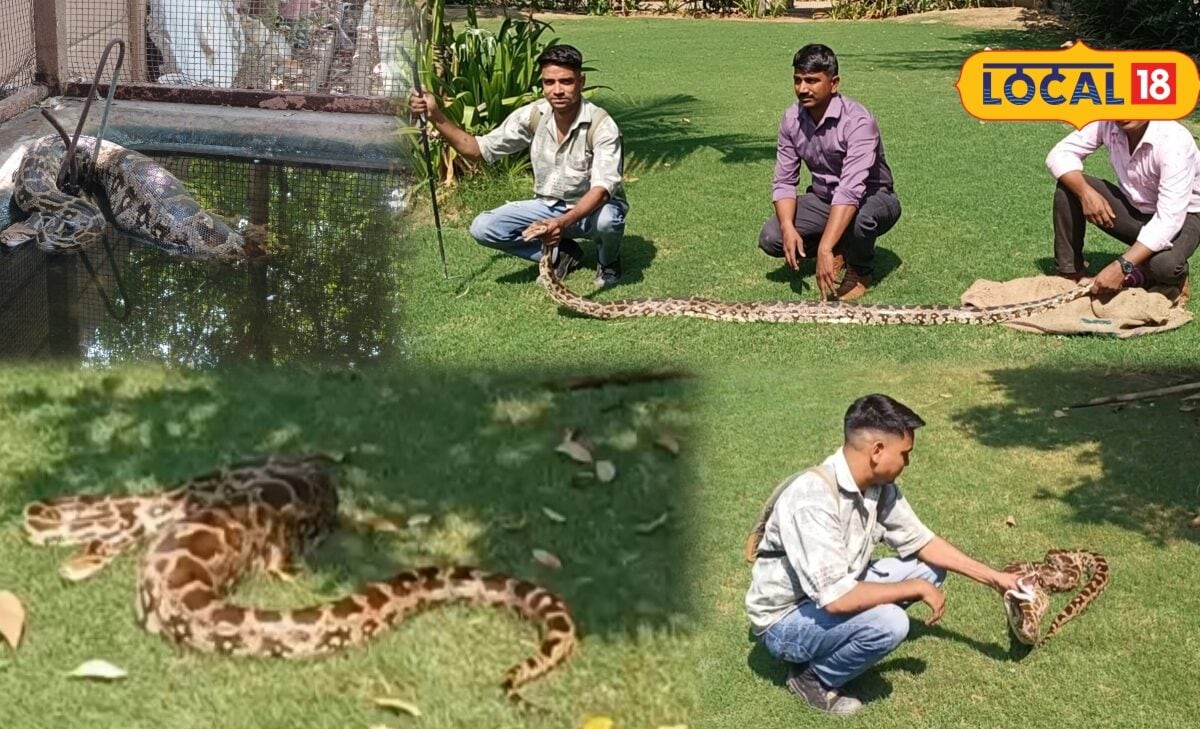
In an alarming incident that highlights the complex interface between human habitations and local wildlife, a massive python measuring approximately 10 feet in length was successfully rescued from a farmhouse in Bhilwara. The reptile, which had covertly entered the premises, managed to hunt and consume a domestic duck, triggering panic among the residents and caretakers present at the location. The episode underscores the persistent ecological challenges faced by rural and semi-urban settlements situated in close proximity to natural habitats.
The incident unfolded at a prominent peacock farmhouse located in the Pur town area of Bhilwara. Farmhouses and agricultural extensions in this region have historically served as transient corridors or shelter zones for various indigenous wildlife species, including reptiles and avian fauna. The undulating terrain and abundant vegetation of Pur make it a natural habitat for several species, thereby increasing the probability of wildlife wandering into private enclosures in search of easy prey, particularly domesticated poultry and waterfowl.
The scale of the situation became immediately apparent when caretakers discovered that a duck had fallen prey to the massive predator. Measuring roughly 10 feet, the python possessed physical dimensions capable of creating significant intimidation, prompting immediate distress calls to relevant authorities. The financial and logistical stakes, while primarily localized to the loss of livestock within the farmhouse, escalated quickly due to the sheer size of the serpent and the potential threat it posed to human occupants and domestic animals alike.
Responding swiftly to the emergency, a joint rescue operation was mobilized involving frontline personnel from the forest department alongside dedicated civil defense volunteers. These trained professionals arrived at the Pur farmhouse equipped with specialized reptile-handling gear. Working in close coordination, the team engaged in a meticulous and cautious extraction process, prioritizing both the safety of the human bystanders and the physical well-being of the wild reptile, which is protected under relevant environmental legislation.
The ripple effects of such wildlife encounters extend across the broader socio-ecological fabric of the region, emphasizing the urgent necessity for heightened community awareness. Incidents of this nature serve as stark reminders of the delicate balance required to coexist with indigenous fauna. Local communities, agricultural workers, and property owners are continually urged to adopt preventive measures, such as securing poultry coops and clearing dense undergrowth, to minimize direct confrontations with predatory wildlife.
Administrative oversight and proactive intervention by the forest department remain critical components in mitigating such conflicts. Authorities reiterated their commitment to responding without delay to distress calls from citizens across Bhilwara. By deploying trained personnel and utilizing standard operating procedures for wildlife rescue and rehabilitation, the district administration ensures that wild animals are safely relocated to appropriate natural habitats far from human settlements.
Looking ahead, local wildlife authorities plan to conduct targeted awareness campaigns across Pur and surrounding rural pockets to educate residents on wildlife behavior and safety protocols. As seasonal shifts often influence the movement patterns of large pythons and other reptiles, continuous vigilance, timely reporting, and community cooperation will remain paramount in preventing panic and ensuring the harmonious protection of both human lives and regional biodiversity.
