
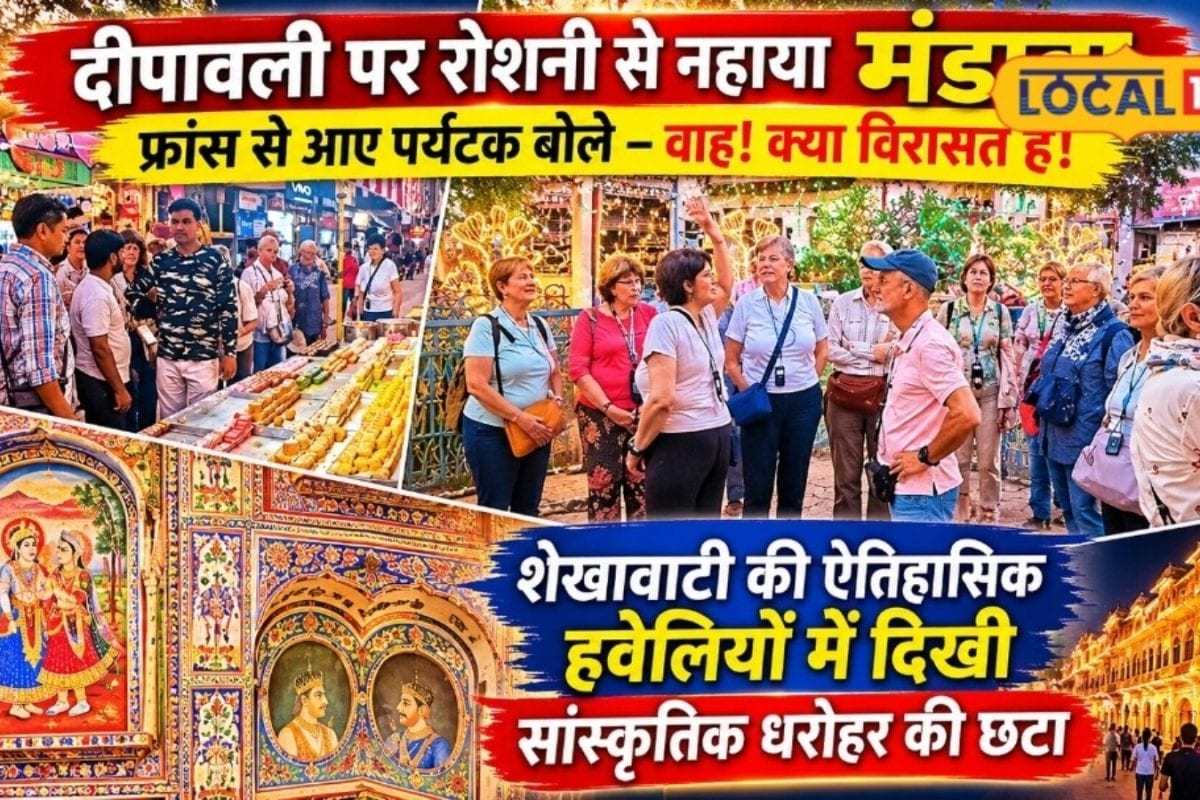
In a vibrant display of cultural confluence, a group of international tourists arriving directly from France became an integral part of the Deepotsav celebrations in the historic town of Mandawa. The historic streets and iconic architectural marvels of the region witnessed an extraordinary gathering of foreign nationals eager to experience traditional Indian festivities firsthand. Amidst the shimmering lights of earthen lamps, the heritage town resonated with festive fervor.
The region of Shekhawati has long held a revered status among global historians, art connoisseurs, and international travelers due to its unparalleled collection of nineteenth-century mercantile mansions. These historic structures, locally known as havelis, serve as open-air art galleries adorned with elaborate frescoes depicting mythological tales, flora, fauna, and colonial encounters. The arrival of French tourists underscores the continued international appeal of these architectural treasures during peak festive seasons.
During their immersive tour across Jhunjhunu district, the visitors spent considerable time examining the intricate details of the courtyard walls and painted archways that define Mandawa's distinctive aesthetic. Local artisans and tour operators noted that the engagement between foreign guests and traditional custodians of the heritage properties fosters a deeper appreciation for preservation efforts. The tourists walked through narrow alleys lined with ornate facades, capturing photographs of the elaborate preparations underway for the festival of lights.
Local residents and community elders expressed immense delight in welcoming international guests to their traditional family celebrations. Sharing sweets, exchanging greetings, and participating in local rituals allowed the French visitors to experience the authentic warmth of rural and semi-urban Rajasthani hospitality. Community representatives emphasized that such interactions bridge cultural divides and project the true spirit of Indian secularism and communal harmony to the global stage.
The broader economic and cultural impact of such international tourism trickles down significantly into the regional economy of surrounding districts, including areas extending toward Kotputli-Behror. Local vendors, handicraft artisans, hospitality service providers, and regional guides benefit directly from the influx of travelers seeking authentic cultural immersion. The growing presence of European tourists during traditional Indian festivals provides a robust stimulus to the local tourism sector.
District tourism authorities and regional heritage conservation committees have continuously advocated for enhanced infrastructure to support the increasing footfall of international travelers during major festivals like Deepotsav. Administrative measures focus on improving sanitation, illumination, and security around major heritage sites in Mandawa and across Jhunjhunu. These concerted efforts ensure that foreign visitors enjoy a seamless and secure exploration of Rajasthan's monumental legacy.
Looking ahead, local tourism stakeholders and cultural organizations anticipate a steady rise in international tourist arrivals during the upcoming peak travel months. Plans are underway to organize structured heritage walks, classical musical performances, and artisan workshops to further enrich the visitor experience. Through sustained community involvement and careful heritage management, Mandawa and the broader Shekhawati region continue to cement their position as premier destinations on the global cultural tourism map.
