
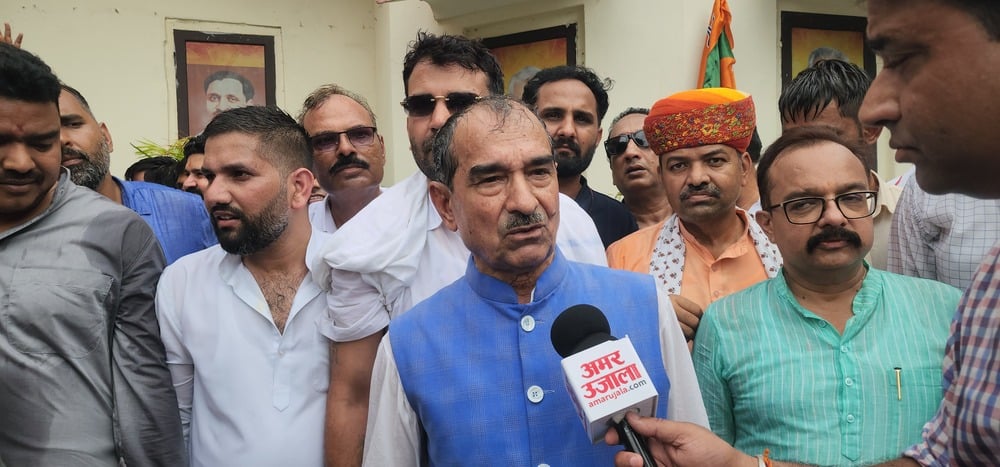
Senior Congress leader Madan Rathod responded sharply to a press briefing by Ashok Gahlot, the President of the Rajasthan Pradesh Congress Committee (PCC), where Gahlot had questioned the party’s election readiness and organisational strength. Rathod, speaking at a gathering of party workers in Jaipur on Wednesday, asserted that the Congress must focus on self‑examination rather than trading accusations, and urged the party to respect the mandate of the electorate as it prepares for the forthcoming state elections.
The confrontation traces its roots to a long‑standing debate within the Rajasthan Congress over leadership, strategy, and grassroots mobilisation. Since the last assembly election, the PCC has undergone several reshuffles, with Gahlot appointed as president in early 2024 to rejuvenate the party’s image. However, internal critics have argued that the committee’s efforts have been fragmented, prompting Gahlot to publicly call for a reassessment of the party’s preparedness.
While no specific financial figures were disclosed, the discourse reflects the broader logistical challenges confronting the Congress in Rajasthan. The party is mobilising resources for candidate selection, campaign logistics, and voter outreach across a state of over 68 million residents. In the Kotputli‑Behror district, where agricultural concerns and industrial development dominate local politics, the effectiveness of the PCC’s organisational machinery will directly influence voter engagement and turnout.
Rathod’s remarks were underscored by direct quotations, most notably his admonition: “Congress must engage in self‑reflection rather than indulge in accusations.” He also referenced the need for the party to accept the electorate’s verdict, emphasizing that internal disputes should not distract from the core mission of representing citizens. Party workers present echoed his call, noting that unity and disciplined campaigning are essential for regaining public trust.
The Kotputli‑Behror region, encompassing both rural agrarian communities and emerging industrial zones, stands at a crossroads. Local traders expressed concerns that prolonged internal strife could delay development projects, while farmers highlighted the importance of clear policy positions on water management and crop pricing. Rathod’s appeal for introspection resonated with these stakeholders, who seek a coherent and responsive party agenda.
In response to the escalating debate, the state election commission has reiterated its commitment to a free and fair electoral process, urging all political parties to maintain decorum. The PCC’s senior officials have scheduled an internal review meeting next week to assess organisational gaps and formulate a unified strategy. Observers note that such measures, if implemented earnestly, could mitigate the risk of factionalism affecting the party’s performance.
Looking ahead, the Congress is expected to finalize its candidate list for the Kotputli‑Behror constituencies within the next fortnight, followed by a series of rallies aimed at consolidating voter support. Rathod’s call for self‑analysis is likely to shape the party’s narrative in the coming weeks, as it strives to present a united front and address the aspirations of a diverse electorate.