
The political landscape of Kota is poised for a significant transformation as the administration prepares for the much-anticipated counting of votes for the civic body elections. Scheduled for Monday morning at 8 AM sharp, the electoral outcome will decide the fate of numerous candidates contesting across 100 wards. Tension and excitement run high among political parties and independent contenders alike as the monumental exercise is set to unfold.
Historically, civic elections in Kota generate immense political friction, serving as a direct barometer of urban sentiment and local governance efficacy. Over the past weeks, the campaign trail witnessed intense mobilization, door-to-door canvassing, and high-decibel debates addressing local infrastructure, sanitation, and municipal service delivery. This electoral cycle has proven to be particularly competitive, given the expanding urban footprint and shifting voter demographics across the municipal jurisdiction.
To manage the mammoth logistical challenge, the district administration has designated JDB College as the primary counting venue. Meticulous planning has gone into the infrastructure of the facility, featuring four dedicated counting halls to streamline the verification and tabulation process. To ensure maximum efficiency and prevent delays, authorities have installed a total of 14 tables in each hall, bringing the operational workforce to an impressive tally of 56 counting teams.
Local stakeholders, including trade association representatives, community leaders, and political agents, have expressed cautious optimism regarding the administrative arrangements. Candidates have engaged in rigorous internal strategy sessions, briefing their polling agents on the counting guidelines and protocols established by the election commission. The financial and political stakes are exceptionally high for all major political formations, as municipal control directly influences local development funds and policy execution.
Beyond the immediate municipal boundaries, the reverberations of the Kota civic elections extend significantly across the regional administrative zones, including the Kotputli-Behror district sphere. Economic activities, local commerce, and urban real estate sentiment frequently correlate with civic stability and local governance outcomes. Business owners and daily wage earners alike are closely monitoring the political transition, anticipating stable leadership that can foster commercial growth and infrastructure enhancement.
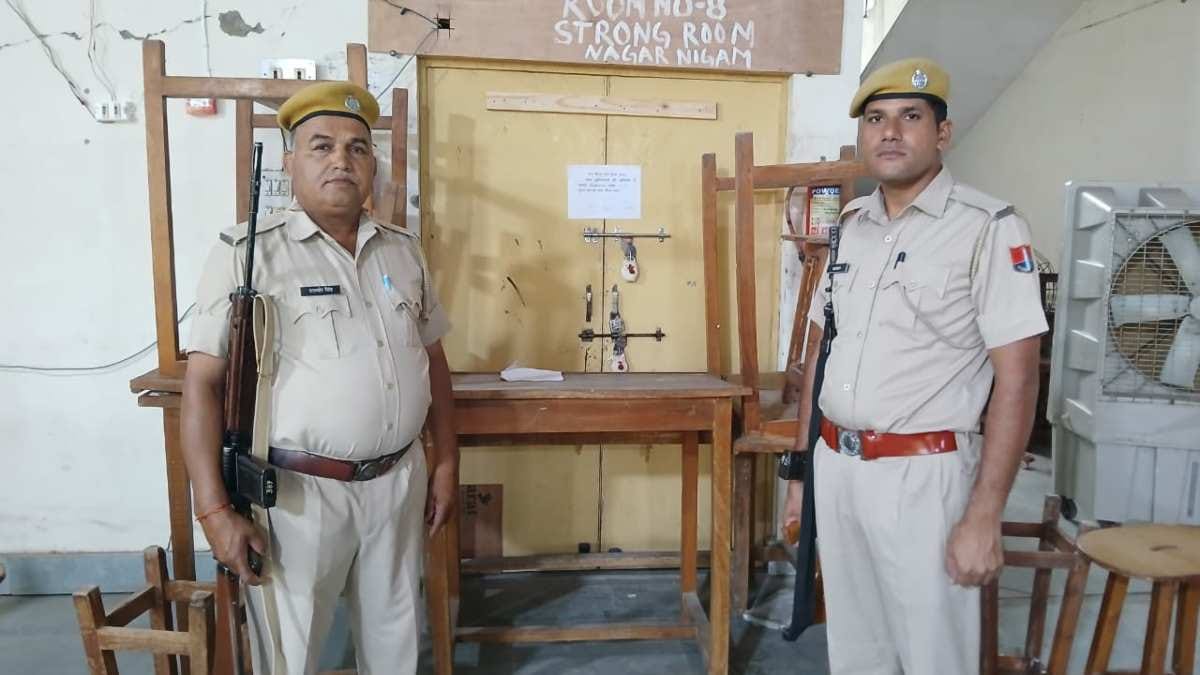
Administrative oversight remains uncompromised as senior officials inspect the JDB College premises to guarantee absolute security, adherence to protocol, and restricted access zones. Paramilitary forces and local police personnel have established a multi-tiered security cordon around the venue to deter any potential public disorder or unauthorized entry. The rigorous monitoring systems implemented by the returning officers underscore the commitment to maintaining absolute electoral integrity throughout the counting duration.
As the clock ticks toward Monday morning, public expectations remain fixed on the unfolding trends from the 100 wards. Once the first round of postal ballots and electronic voting machine data is processed, a clearer picture of the new municipal council will emerge. The definitive results will not only crown the victorious councilors but also set the legislative and developmental agenda for Kota for the upcoming tenure.