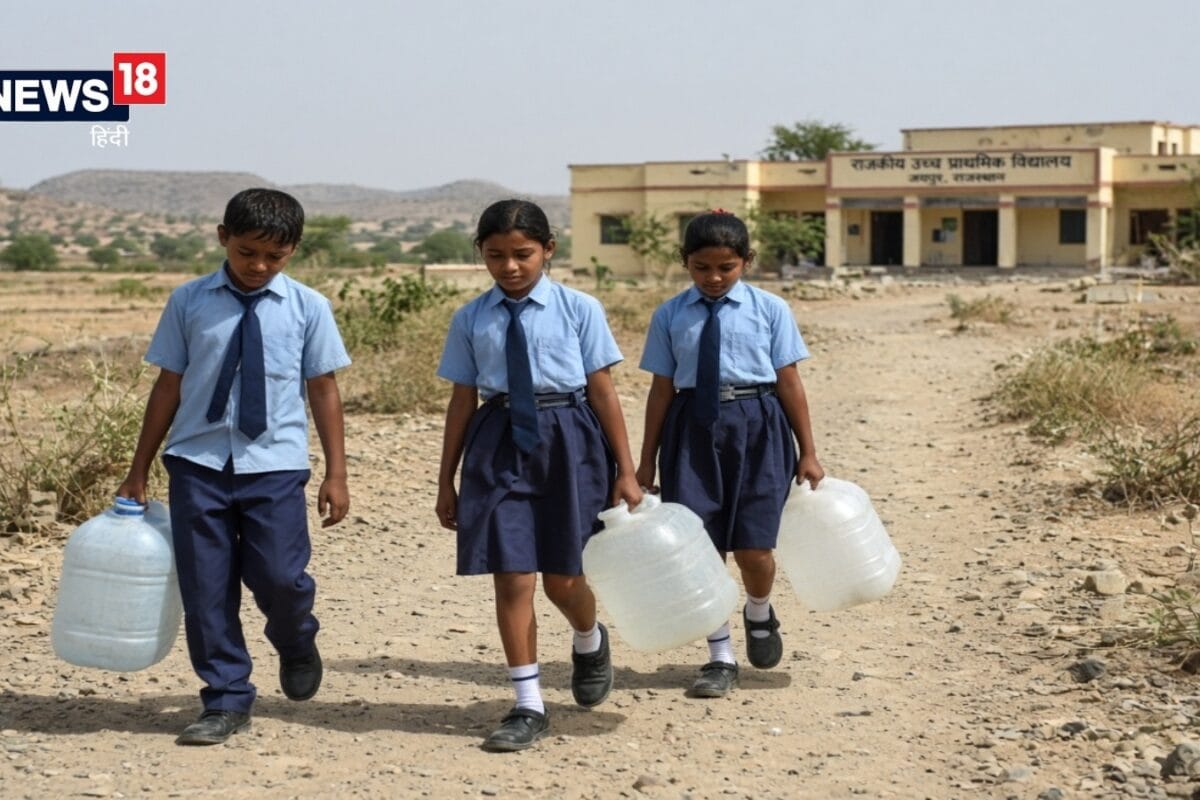
In an alarming development that has triggered intense public scrutiny and administrative concern across the region, a disturbing video has surfaced from Shahpura within the Jaipur district of Rajasthan, vividly capturing young school children engaged in manual labor. The widely circulated footage reveals students physically transporting heavy water cans from a distance of approximately 150 meters back to their school premises. This troubling sight has instantly transformed into a major talking point, exposing severe vulnerabilities and questionable operational practices within the local educational infrastructure of the region.
The genesis of this controversy lies in the daily struggles faced by students and staff when fundamental amenities such as reliable drinking water supply fail within institutional boundaries. Historically, rural and semi-urban educational institutions in parts of Rajasthan have frequently grappled with infrastructural deficits, but compelling young minds to shoulder logistical burdens of this nature crosses ethical and legal boundaries. The absence of an uninterrupted internal water pipeline or storage facility forces institutions into desperate measures, inadvertently shifting operational burdens onto vulnerable minors whose primary objective should be academic pursuits.
According to ground reports and details emerging from the viral footage, the children were forced to navigate a grueling 150-meter stretch while hauling water containers to fulfill the daily hydration needs of the school community. Such arduous tasks not only distract students from their classroom learning but also pose substantial physical risks, including muscular strain and fatigue, given the tender age of the individuals involved. The sheer distance of 150 meters highlights a critical breakdown in institutional planning, where basic sustenance is treated as an afterthought rather than a guaranteed fundamental prerequisite.
As the video gained traction across various digital and social media platforms, it immediately attracted the attention of local community members, parents, and civil society groups, leading to widespread outrage. Stakeholders and local citizens have openly questioned the accountability of school management committees and the local educational authorities responsible for ensuring a conducive and safe learning environment. Critics argue that utilizing students for manual chores like transporting heavy water cans is a direct violation of child rights and points to a systemic failure in monitoring basic facilities at the grassroots level.
While News18 Rajasthan has brought this compelling issue to light, the network has maintained necessary journalistic caution by stating that it independently verifies the broader context while acknowledging the severe visual evidence presented in the clip. The repercussions of this incident extend deep into the socio-educational fabric of the Kotputli-Behror and Jaipur regions, where local communities are increasingly demanding stringent oversight to prevent the recurrence of such exploitative practices. The incident serves as a grim reminder of the urgent need for structural reforms in school administration.
In response to the mounting public pressure and the viral nature of the footage, local administrative bodies and educational regulators are facing intense scrutiny to launch formal inquiries into the matter. Educational officers are expected to inspect school facilities across Shahpura and neighboring zones to ensure that drinking water arrangements are adequately met through institutional mechanisms rather than student labor. Stakeholders emphasize that swift administrative intervention is imperative to restore public trust and establish strict protocols safeguarding student dignity and welfare.
Looking ahead, the incident is anticipated to catalyze policy discussions regarding mandatory infrastructural audits for all recognized schools operating within the Jaipur district. Civil society organizations and parent-teacher associations are mobilizing to demand accountability, transparent funding utilization for basic amenities, and strict punitive guidelines for institutions that compromise child safety. As the investigation unfolds, the ultimate test for local authorities will lie in implementing foolproof measures that permanently eradicate such distressing practices from the educational landscape.