
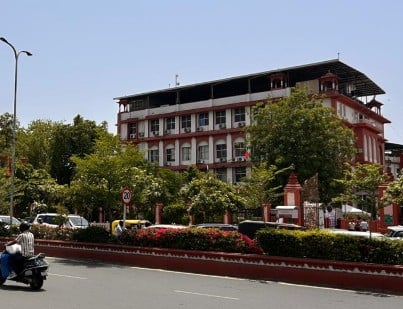
In a significant shift in urban governance and infrastructure planning, the administration in Jaipur has decided that government departments will no longer receive independent parcels of land for their operations. Instead, future administrative setups will be accommodated within modern multi-storey office complexes, marking a departure from traditional horizontal expansion. This strategic policy aims to optimize the utilization of scarce urban land resources while fostering a more centralized and integrated working environment for various government bodies operating within the region.
The historical context of administrative expansion in Jaipur reveals a persistent challenge regarding land allocation and maintenance. Over the decades, numerous government departments acquired independent plots, leading to fragmented office locations, inefficient land use, and escalating maintenance costs for aging structures. Many of these older buildings have fallen into disrepair, becoming underutilized assets that fail to meet the contemporary operational demands of efficient public service delivery, thereby necessitating a comprehensive policy intervention.
Analyzing the ground reality and administrative logistics, the new directive emphasizes the identification and transformation of vacant, underutilized, and dilapidated government properties. By consolidating various departments under one roof within multi-storey complexes, the government aims to curb unnecessary expenditure on sprawling infrastructure and redirect resources toward public welfare and administrative efficiency. This approach ensures that valuable urban spaces are utilized to their maximum potential rather than remaining locked in obsolete, low-density structures.
Stakeholder perspectives on this development highlight a blend of cautious optimism and administrative restructuring challenges. Government officials and urban planners have noted that while consolidation improves inter-departmental coordination and citizen accessibility, meticulous planning is required to ensure that the new multi-storey complexes possess adequate parking, modern amenities, and digital infrastructure to support seamless operations without creating localized congestion.
Examining the broader regional impact, this policy direction sets a precedent for administrative infrastructure management across surrounding areas, including districts like Kotputli-Behror. As urban centers expand, the pressure on land resources intensifies, making the vertical integration of government offices a practical blueprint for sustainable regional development. Local administrative bodies are closely observing the implementation of this model in Jaipur to assess its viability for future decentralized governance structures.
The administrative response to the challenges of aging infrastructure involves rigorous oversight and statutory measures to execute the redevelopment phase effectively. Committees have been tasked with auditing existing government land banks, cataloging dilapidated assets, and formulating phased timelines for demolition, clearance, and modern construction to ensure transparency and accountability throughout the execution process.
Looking forward, the successful realization of this ambitious urban redevelopment initiative will depend on strict adherence to execution timelines and inter-departmental cooperation. As the blueprint transitions into physical construction and office allocations, the public and administrative machinery anticipate a modernized, efficient, and resource-conscious governance ecosystem in Jaipur and its extended administrative jurisdiction.