
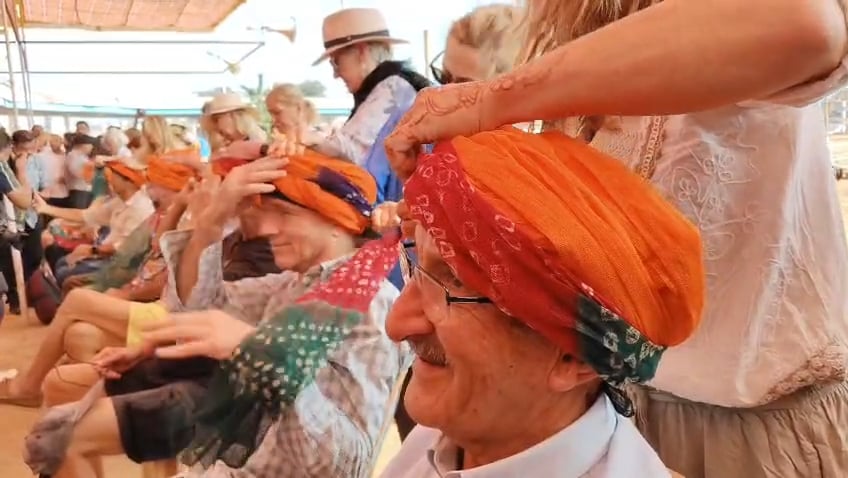
The vibrant cultural landscape of the historic Pushkar Fair recently became the epicentre of global cross-cultural integration as international visitors immersed themselves deeply in age-old Rajasthani traditions. Amidst the bustling festivities, a special cultural competition focused on traditional turban tying and tilak application drew remarkable attention from both domestic spectators and foreign guests. This unique event was meticulously organized to promote local heritage and provide international tourists with a hands-on experience of indigenous Rajasthani customs.
Historically, the sacred town of Pushkar has served as a melting pot of diverse cultures, attracting travelers, pilgrims, and traders from every corner of the globe for centuries. The tradition of tying the Rajasthani turban, locally known as the safa, signifies utmost respect, honor, and social stature in regional heritage. Over the decades, incorporating foreign nationals into these traditional practices has transformed the fair into a truly global platform for cultural exchange, fostering mutual understanding and global brotherhood through shared traditional experiences.
According to the official ground statistics recorded during the event, more than ten countries were proudly represented, with nearly twenty couples stepping forward to participate in the high-energy contest. The rigorous evaluation criteria focused primarily on precision, traditional styling, and speed. Amidst thunderous applause from the gathered audience and fellow tourists, participants diligently attempted to master the complex art of draping the meters-long traditional fabric around their heads with utmost grace and dignity.
Local artisans, cultural custodians, and trade representatives expressed profound delight at the overwhelming enthusiasm displayed by the international participants. Observers noted that such engaging activities significantly boost the morale of local craftsmen who take immense pride in preserving their ancestral art forms. Community elders and event organizers emphasized that witnessing foreign nationals embrace traditional attire with such profound reverence reinforces the timeless global appeal of regional Rajasthani heritage.
While the immediate celebrations centered around Pushkar, the ripple effects of such successful cultural events extend far into the broader regional economy, including areas such as Kotputli-Behror and neighboring districts. Increased international tourist participation directly benefits regional tourism networks, local handicraft markets, and hospitality sectors. The successful execution of these events highlights the economic viability of promoting indigenous cultural traditions as a core component of sustainable regional tourism development.
Administrative authorities and festival organizers played a pivotal role in ensuring the smooth logistical execution of the competition while maintaining rigorous safety standards for all participating international guests. Adequate security measures, crowd management protocols, and cultural orientation sessions were established beforehand to guarantee a seamless experience. Municipal and tourism officials reiterated their unwavering commitment to upholding the highest standards of hospitality and security for all visitors attending the annual fair.
Looking toward the future, administrative bodies and cultural committees plan to expand these international engagement programs in upcoming editions of the fair, introducing more categories to celebrate global participation. As the concluding moments of the competition arrived, the podium standings were officially announced, with the talented couple from Mexico claiming the prestigious first title by completing the task in a record-breaking ten seconds, followed closely by the Italian couple securing the second position and the English representatives earning the third spot, marking a triumphant celebration of global harmony.
