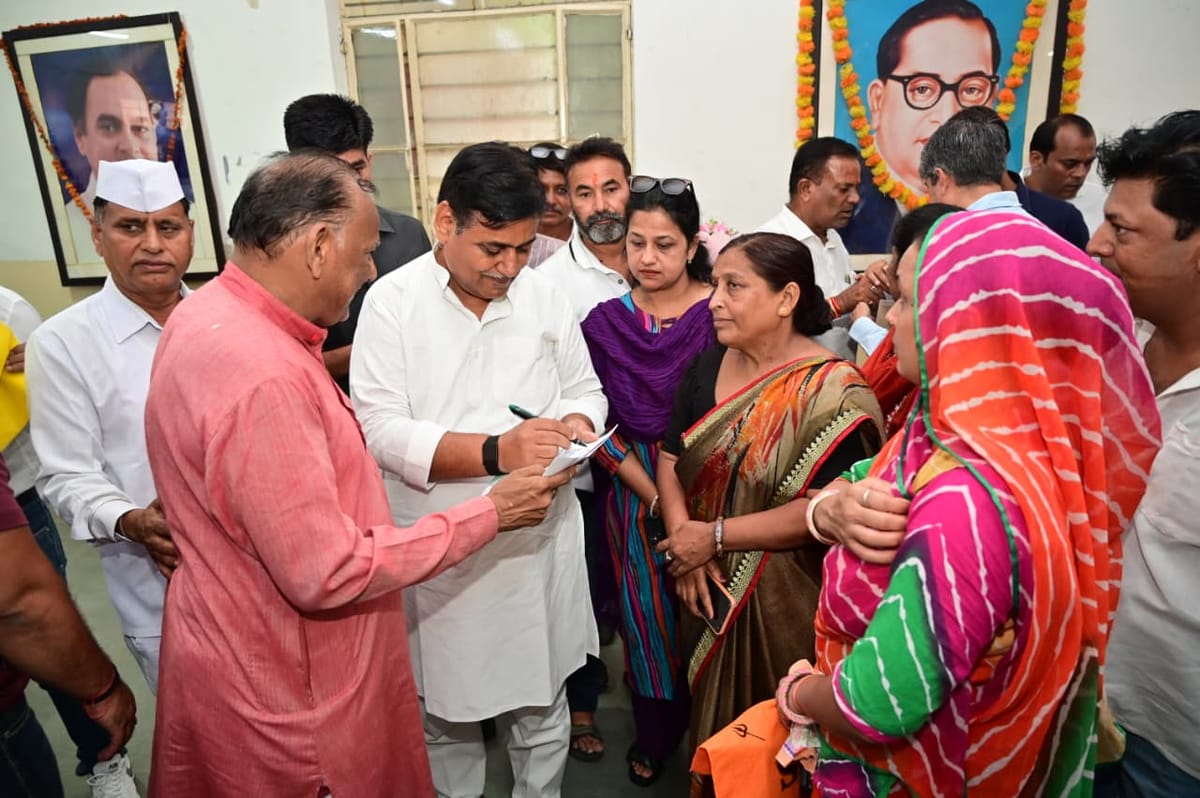
Internal turmoil has intensified significantly within the Rajasthan Congress party following the conclusion of the recent municipal elections. The political landscape across the state has witnessed sudden disruptions as widespread dissent surfaces within the party ranks, stretching from the state capital of Jaipur to Bharatpur, Deeg, and Bhilwara. Party members and local functionaries have expressed profound dissatisfaction over organizational matters and electoral outcomes, signaling deep-seated fractures within the regional leadership structure.
Historically, the aftermath of local body elections often brings underlying organizational tensions to the surface, and this cycle has proven to be no exception for the Rajasthan Congress. The recent electoral battles served as a crucible for testing party unity at the grassroots level. As results were finalized and analyzed, long-standing internal rivalries, competition for dominance, and grievances regarding candidate selection and resource management immediately bubbled over into public view.
The unfolding developments have exposed serious operational challenges within the party apparatus across the affected districts. In various regions, local organizers and party workers have pointed fingers at one another, attributing the electoral setbacks or administrative disconnects to specific leadership failures. The friction is not confined to a single locality but manifests as a widespread phenomenon impacting multiple municipal jurisdiction zones simultaneously.
As the conflict deepens, various stakeholders within the political ecosystem have articulated their frustration regarding the current state of affairs. While some factions are demanding immediate accountability and structural overhauls, others are calling for the resignation of key local figures whom they hold responsible for the internal discord. These competing demands have created an atmosphere of uncertainty and division among the party rank and file.
The ongoing unrest carries substantial implications for the broader political dynamics within the state, particularly concerning how opposition unity and local governance are perceived by the public. While the immediate epicenter of the dispute spans Jaipur, Bharatpur, Deeg, and Bhilwara, the shockwaves of these local disagreements threaten to destabilize party coordination across neighboring administrative regions and urban centers throughout Rajasthan.
Administrative observers and political analysts are closely monitoring the response of senior party leadership to these escalating protests and demands for resignations. Effective intervention by central and state-level party authorities will be critical in containing the fallout, addressing legitimate grievances, and restoring discipline among disgruntled members before the dissent causes permanent damage to the organizational framework.
Looking ahead, the resolution of this intra-party crisis will depend heavily on the willingness of leadership to engage in constructive dialogue and enforce strict accountability. The coming weeks will test the crisis management capabilities of the Rajasthan Congress as they attempt to reconcile competing factions, rebuild internal trust, and refocus their energies on future legislative and municipal objectives.