
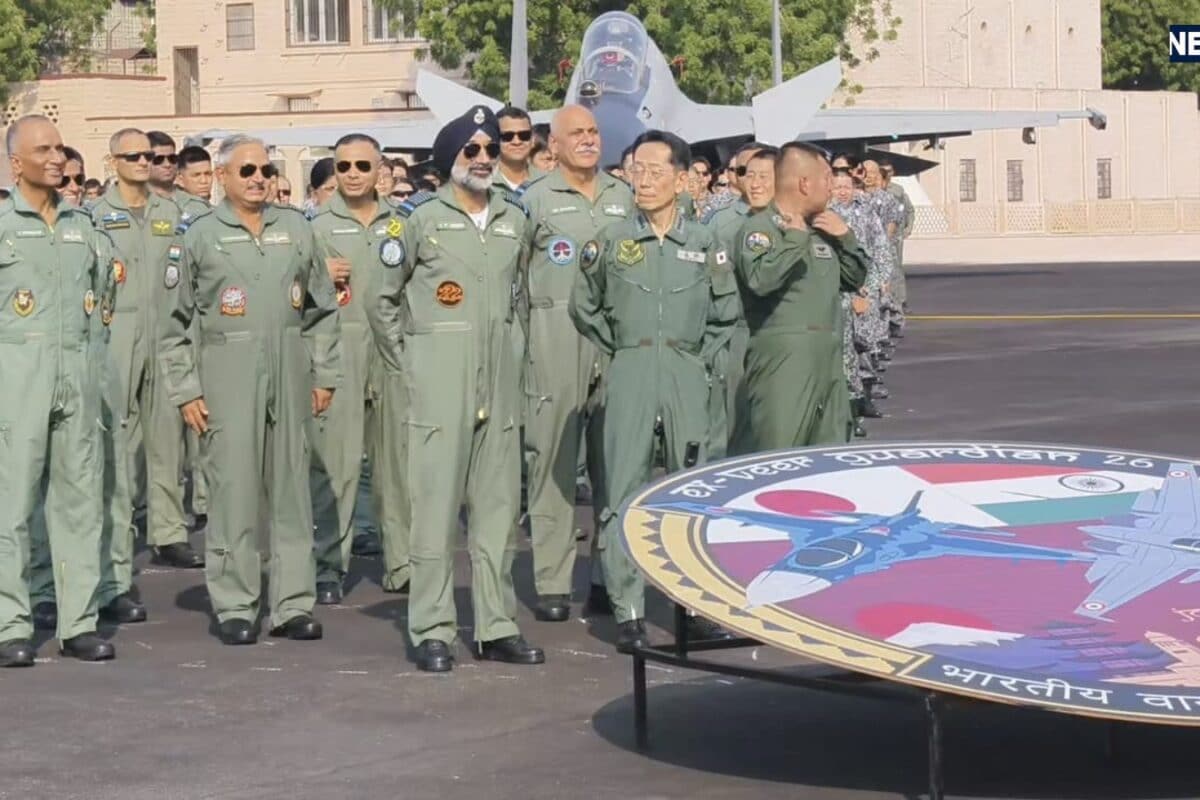
In a momentous display of bilateral defence cooperation and strategic partnership, the air forces of India and Japan staged an impressive demonstration of aerial might in the skies above Jodhpur. The joint military engagement, designated as 'Veer Guardian', witnessed top leadership from both nations taking to the skies together, marking a historic milestone in contemporary military diplomacy and tactical interoperability between the two democratic nations.
The focal point of this joint exercise was the simultaneous flight of the Indian and Japanese air force chiefs who boarded the indigenously manufactured Tejas fighter jet. This high-profile sortie not only underscored the technological prowess and reliability of India's indigenous defence manufacturing sector but also demonstrated absolute mutual trust and professional camaraderie between the air command structures of India and Japan.
Against the backdrop of the expansive Thar desert terrain in Jodhpur, various tactical manoeuvres and operational drills were executed by the frontline combat aircraft of both nations. The exercise was meticulously designed to test and refine joint operational capabilities, enhance tactical proficiency, and establish standardized procedures for future cooperative missions in the Indo-Pacific region and beyond.
Defence analysts and strategic observers have noted that exercises of this magnitude carry immense geopolitical significance, serving as a powerful testament to the shared vision of a secure, open, and prosperous regional order. The participation of senior leadership in direct operational flights communicates a resolute message of solidarity, strategic alignment, and unwavering commitment to regional stability.
While the primary theatre of operations remained centered in Jodhpur, the broader ramifications of such high-level bilateral engagements resonate deeply across various administrative and strategic corridors, reinforcing the strategic value of defence partnerships. The seamless coordination observed during the exercise reflects extensive preparatory planning and mutual sharing of best practices between the two sophisticated air forces.
Administrative authorities and defence ministries from both countries have continuously overseen the meticulous execution of the 'Veer Guardian' schedule, ensuring strict adherence to safety protocols and strategic objectives. The oversight mechanisms established for this joint venture have functioned efficiently, facilitating smooth logistical arrangements and optimal utilization of airspace and ground infrastructure.
Looking ahead, the successful culmination of this joint aerial demonstration paves the way for deeper institutional exchanges, advanced joint training modules, and enhanced technological collaboration in the aerospace domain. Both nations are poised to build upon the momentum generated at Jodhpur, fostering a long-term framework of defence cooperation that will undoubtedly benefit regional security and bilateral strategic interests for years to come.