
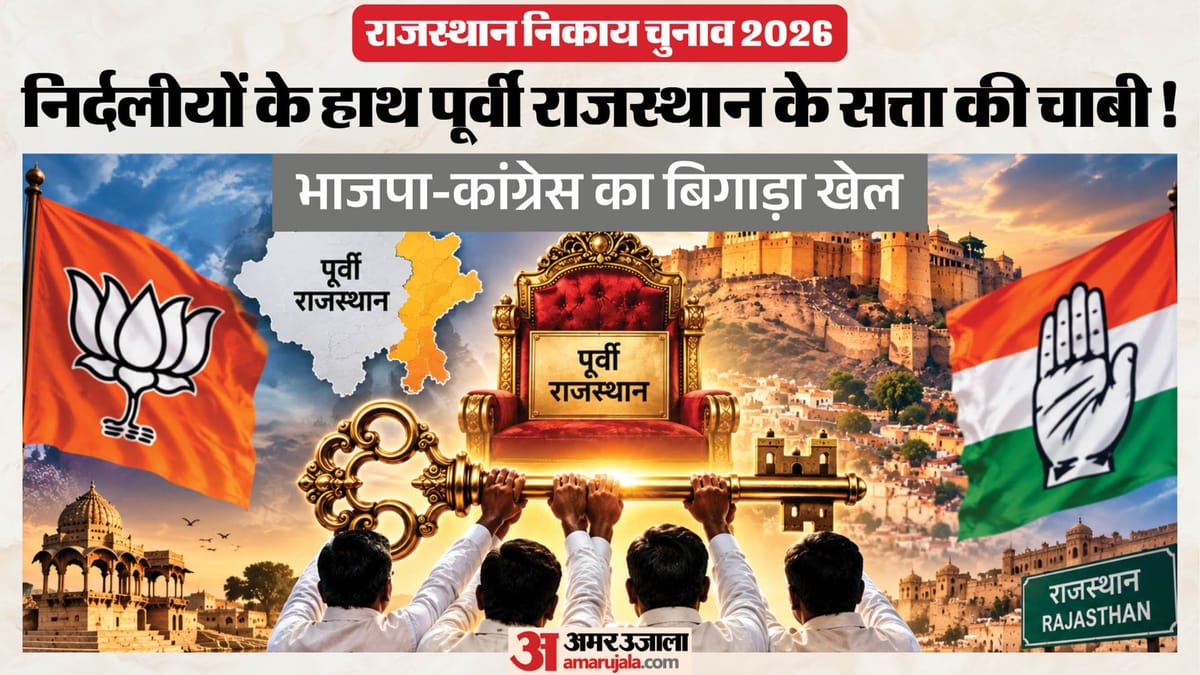
The recent municipal body election results across Rajasthan have sent shockwaves through the established political corridors, particularly in the eastern region of the state. Independent candidates have staged a remarkable surge, decisively disrupting the traditional two-party dominance of the Bharatiya Janata Party and the Congress. This electoral outcome highlights a profound shift in voter sentiment at the local level, where grassroots connections often outweigh party affiliations.
Historically, municipal elections in Rajasthan have served as a direct battleground between the state's two dominant political heavyweights, the Bharatiya Janata Party and the Congress. However, grassroots political dynamics have evolved significantly over recent years. Local governance issues, public dissatisfaction with ticket distributions, and the rising popularity of influential local leaders have consistently provided fertile ground for independent candidates to challenge party lines.
As the final vote tallies unfolded across various urban bodies in Eastern Rajasthan, the depth of the political upset became abundantly clear. In numerous municipal wards, independent aspirants not only secured unexpected victories but also completely dismantled the arithmetic of the major political parties. The sheer volume of successful independent candidates has transformed the post-election landscape into a complex puzzle of negotiations and alliances.
Political observers and local citizens have noted that the rise of independent candidates reflects a growing desire for accountable local leadership. Voters increasingly evaluate candidates based on individual capability and accessibility rather than sweeping national or statewide party agendas. This localized voting behavior has empowered ordinary citizens and grassroots workers to voice their discontent with conventional party machinery.
Within the Kotputli-Behror district and surrounding eastern regions, the impact of these election results is being felt deeply. Local communities and trade associations are closely monitoring the political realignments, as municipal governance directly influences civic infrastructure, commercial development, and daily urban amenities. The shifting balance of power requires both major parties to re-evaluate their engagement strategies with local electorates.
Administrative authorities across the affected urban bodies have initiated necessary protocols to ensure a smooth transition following the election results. Election officials are managing the complex procedures associated with council formations, where independent councilors now hold the decisive balance of power. Statutory guidelines and administrative oversight remain strictly enforced to maintain transparency during the upcoming mayoral and chairperson elections.
Looking ahead, the political scenario in Eastern Rajasthan enters a highly unpredictable phase as negotiations for majority formations intensify. Both the Bharatiya Janata Party and the Congress are actively courting winning independent candidates to secure control over municipal boards. The final governance structures will largely depend on how these influential independents choose to align their loyalties in the coming days.