
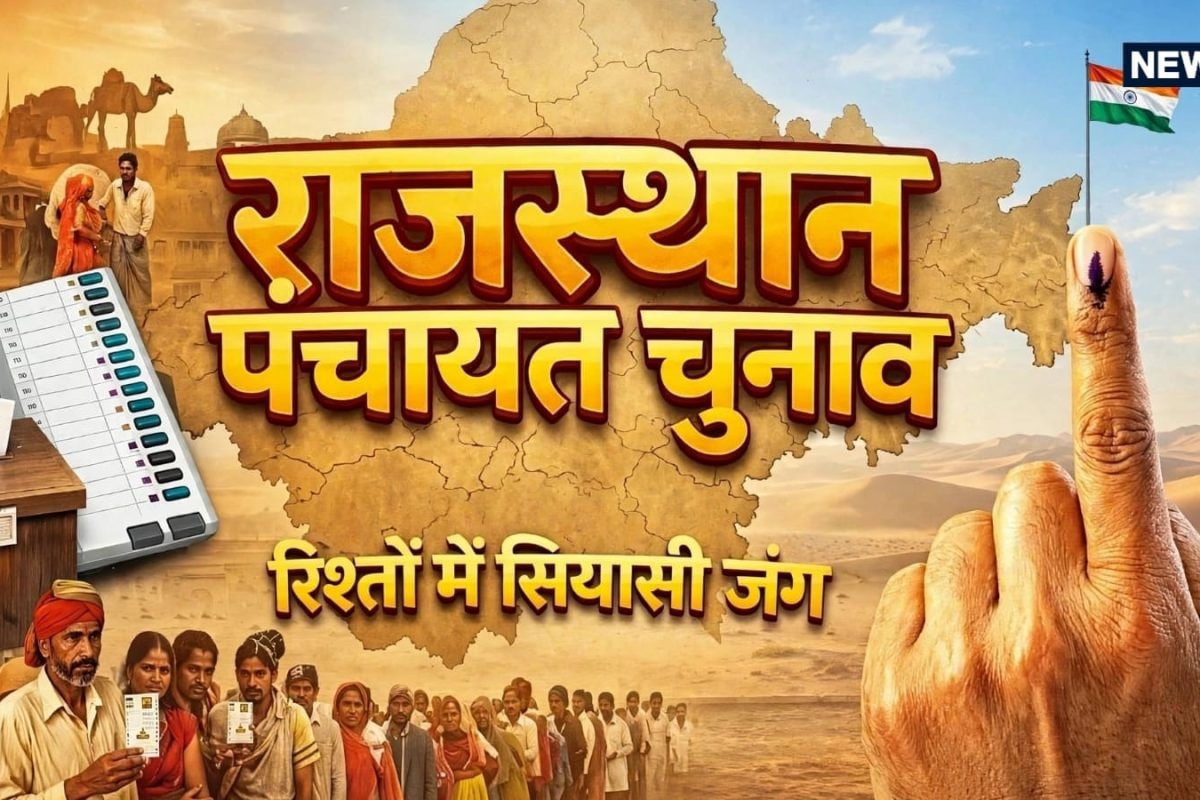
The ongoing rural local body elections in Rajasthan have evolved beyond conventional party politics, introducing a fascinating dimension where domestic relationships and political ambitions intertwine. Across various districts of the state, voters are witnessing electoral contests featuring close relatives who have entered the political fray from different seats under the banners of major political parties, including the Bharatiya Janata Party and the Congress. This unprecedented familial overlapping of candidatures has turned the traditional grassroots democratic exercise into a subject of extensive community debate.
Historically, panchayat elections in rural Rajasthan have been contested along the lines of caste equations, local community leadership, and traditional family alliances. However, the current electoral cycle has shattered conventional patterns by elevating internal family dynamics directly into the public sphere. Political parties have strategized by placing their trust in multiple individuals belonging to the same household, fielding them across distinct wards and territorial constituencies, thereby multiplying their organizational footprint within specific pockets of influence.
A closer examination of the ground reality reveals specific instances across several districts that highlight this intriguing trend. In Churu, both the Bharatiya Janata Party and the Congress have fielded husband-wife duos, a phenomenon mirrored in the districts of Jalore and Barmer where spouses have actively campaigned on separate tickets. Similarly, the electoral contests in Jhunjhunu, Bikaner, and Nagaur have drawn widespread attention due to the high-profile rivalries and participations involving sisters-in-law. Meanwhile, in Shrimadhupur, a mother and her two sons have entered the electoral arena by contesting from different wards, creating a unique three-way familial contest.
Political analysts, local observers, and voters have expressed mixed reactions regarding this domestic political phenomenon. Supporters argue that fielding capable members from the same household reflects their deep-rooted community service and grassroots influence. Conversely, critics and local community elders point out that such intra-family candidatures could potentially intensify domestic friction and polarize local household loyalties. Despite these varying perspectives, the active engagement of these family members underscores the high stakes involved in capturing rural local governance structures.
The ripple effects of these high-stakes family contests extend deeply into the regional socio-political fabric of Rajasthan, including emerging administrative units such as the Kotputli-Behror district. While the direct operational focus remains on districts like Churu, Jalore, Barmer, Jhunjhunu, Bikaner, Nagaur, and Shrimadhupur, local communities across the broader region are closely monitoring these developments. The outcomes of these elections are anticipated to reshape traditional power equations at the village level, influencing how community leadership and political patronage are distributed in future cycles.
Administrative machinery and election oversight bodies have ensured that all polling processes are conducted smoothly, maintaining strict adherence to the Model Code of Conduct despite the intense personal and familial nature of the contests. District election officers across the affected regions have deployed adequate security personnel and administrative staff to guarantee free, fair, and transparent voting. While the candidates navigate the complex intersection of personal relationships and intense political rivalry, election officials remain focused on maintaining absolute neutrality and electoral integrity.
As the final phases of polling conclude and campaigns wind down, public attention remains firmly fixed on the ballot boxes. The ultimate verdict rests entirely in the hands of the rural electorate, whose votes will determine which members of these politically active families secure victory. The election results will not only reveal the political fortunes of these closely related candidates but will also establish a significant precedent for how familial alliances and political parties navigate grassroots democracy in Rajasthan.
