
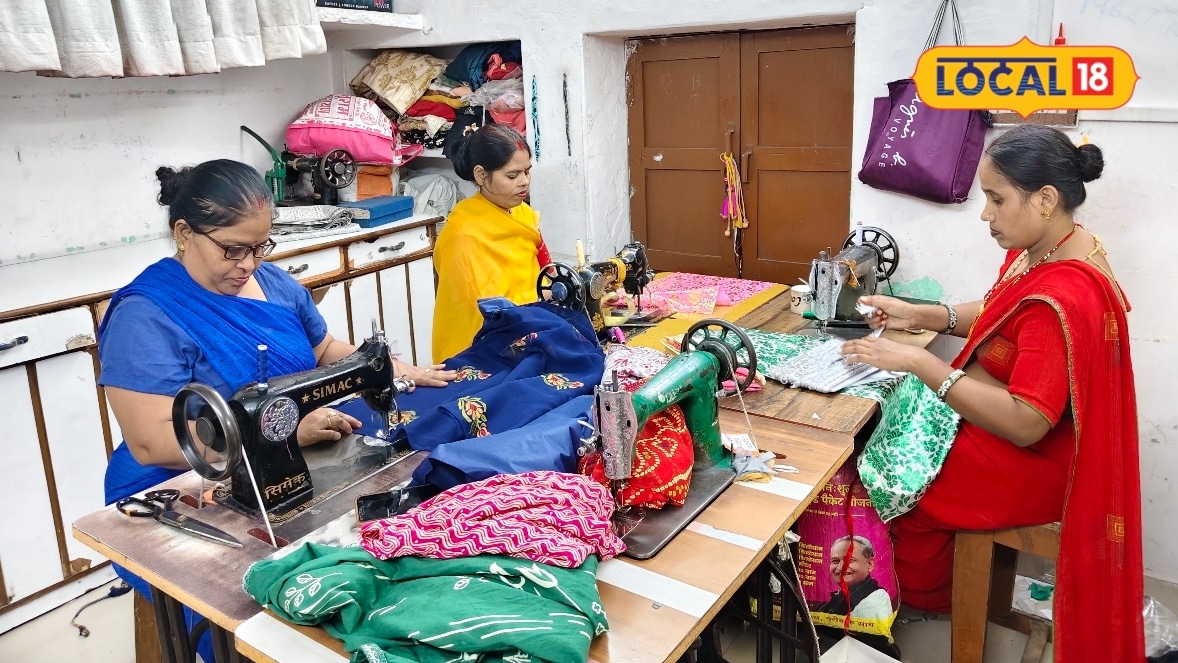
In an inspiring development emerging from Kota, local women are increasingly embracing home-based tailoring enterprises as a viable and sustainable pathway toward complete financial independence and self-reliance. This grassroots economic movement highlights how traditional domestic skills, when combined with modern digital accessibility, can generate substantial livelihood opportunities right from the comfort of one's home without requiring massive initial capital investments or complicated infrastructural setups.
The historical context of cottage industries in Rajasthan reveals a long-standing tradition of women utilizing textile and stitching crafts to support their households. Over the decades, while industrial manufacturing expanded significantly, the demand for localized, custom-stitched garments has remained consistently strong across rural and semi-urban localities, creating a dependable niche for skilled domestic artisans who wish to contribute monetarily to their families.
Examining the ground reality and financial stakes involved, local entrepreneur Dwarka has shared vital insights into the daily operations and profit margins associated with this vocation. According to the reported facts, women engaged in crafting everyday garments such as petticoats and gowns can comfortably earn between 300 to 400 rupees on a daily basis. This steady stream of income serves as a crucial financial cushion for countless households, significantly improving their purchasing power and overall standard of living.
A critical catalyst in modernizing this traditional craft is the widespread adoption of digital learning tools. Dwarka points out that contemporary platforms such as Facebook and YouTube have revolutionized the way women acquire new skills and master advanced apparel designs. By utilizing these online portals, home-based workers can study intricate tailoring techniques, observe trending garment patterns, and replicate high-quality items independently without needing expensive formal training academies.
Beyond individual skill acquisition, the broader regional impact of such micro-enterprises on the local economy of Kotputli-Behror and surrounding districts is profound. When women generate independent incomes through tailoring, local markets experience increased consumer activity, and community resilience against economic shocks is substantially strengthened, fostering an environment of collaborative growth and mutual support among female entrepreneurs.
Furthermore, various governmental schemes and institutional support mechanisms play a pivotal role in facilitating this socio-economic transformation. State-backed initiatives provide necessary guidance, financial literacy, and occasional resource assistance, ensuring that women looking to establish small-scale tailoring ventures face minimal bureaucratic hurdles and can easily access the tools required to scale their operations.
Looking toward the forward outlook, community leaders and local administrators expect a continuous rise in home-based textile ventures as digital literacy deepens across households. With structured guidance, robust governmental welfare schemes, and accessible online design tutorials from platforms like Facebook and YouTube, the future for women entrepreneurs in Kota and neighboring regions remains remarkably bright and economically promising.