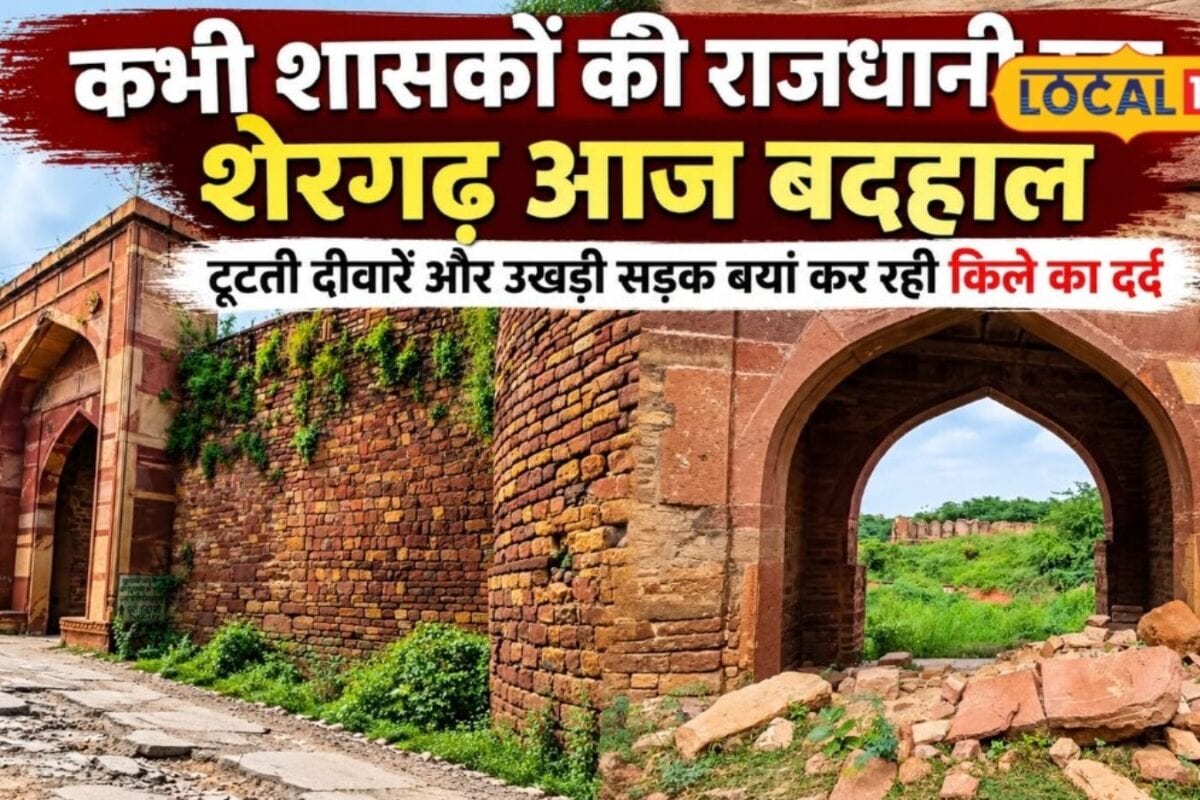
Situated along the banks of the Chambal River, the historic 900-year-old Shergarh Fort in Dholpur is currently battling severe neglect, standing as a poignant testament to official apathy. Once serving as a formidable capital for sovereign rulers, this magnificent architectural marvel is steadily disintegrating into ruins. The majestic walls of the fortress are collapsing under the weight of time and weather, while debris litters the inner pathways, creating a distressing sight for anyone visiting the heritage site.
Tracing its glorious past, the Shergarh Fort holds immense historical significance that stretches back nearly nine centuries. Having witnessed the rise and fall of various empires, the monumental status of this fort is further cemented by its literary mention in 'Tuzuk-e-Baburi', the memoirs of the Mughal emperor Babur. For generations, this citadel stood as an epitome of strategic defense and architectural brilliance, commanding panoramic views of the rugged Chambal ravines and serving as a crucial administrative seat in the region.
However, the ground reality today presents a heart-wrenching contrast to its glorious heritage. The infrastructure leading up to the monument has completely deteriorated, with the approach roads suffering extensive damage and turning into broken tracks of gravel and dust. This severe lack of connectivity and basic maintenance causes immense hardship for tourists and history enthusiasts who attempt to visit the site, ultimately discouraging cultural tourism and disconnecting the present generation from their ancestral legacy.
Deeply concerned by the rapid decay of this architectural masterpiece, prominent historians, cultural experts, and local citizens have raised their voices in unison. They are urgently pressing the government to intervene before the structural damage becomes completely irreversible. Among the primary demands put forward by the intelligentsia is the execution of comprehensive archaeological conservation projects alongside the construction of a dedicated 'Chambal view tower' to enhance visitor engagement and security.
The cultural and economic repercussions of this neglect extend far beyond the immediate vicinity of Dholpur, dampening the tourism potential of the entire region. Heritage experts argue that restoring the Shergarh Fort could significantly boost local economic activity through increased tourism, generating employment opportunities for local residents, artisans, and service providers. A well-preserved monument would place Dholpur more prominently on the national heritage tourism map, fostering a sense of civic pride and regional development.
As public outcry intensifies, the onus now rests heavily upon the government and concerned administrative bodies to formulate a time-bound restoration strategy. Heritage conservationists emphasize that mere announcements will no longer suffice; what is required is a transparent, adequately funded, and scientifically executed preservation blueprint. Immediate structural reinforcement of the collapsing walls and urgent reconstruction of the access roads are deemed absolute prerequisites for saving the historic site.
Looking toward the future, the preservation of the 900-year-old Shergarh Fort serves as a critical test for state authorities regarding heritage management and cultural preservation. If proactive measures are swiftly implemented in collaboration with historians and conservation architects, this glorious monument can be rescued from oblivion. The collective expectation remains that the government will heed these urgent appeals and restore Shergarh Fort to its rightful place of architectural and historical prominence.