
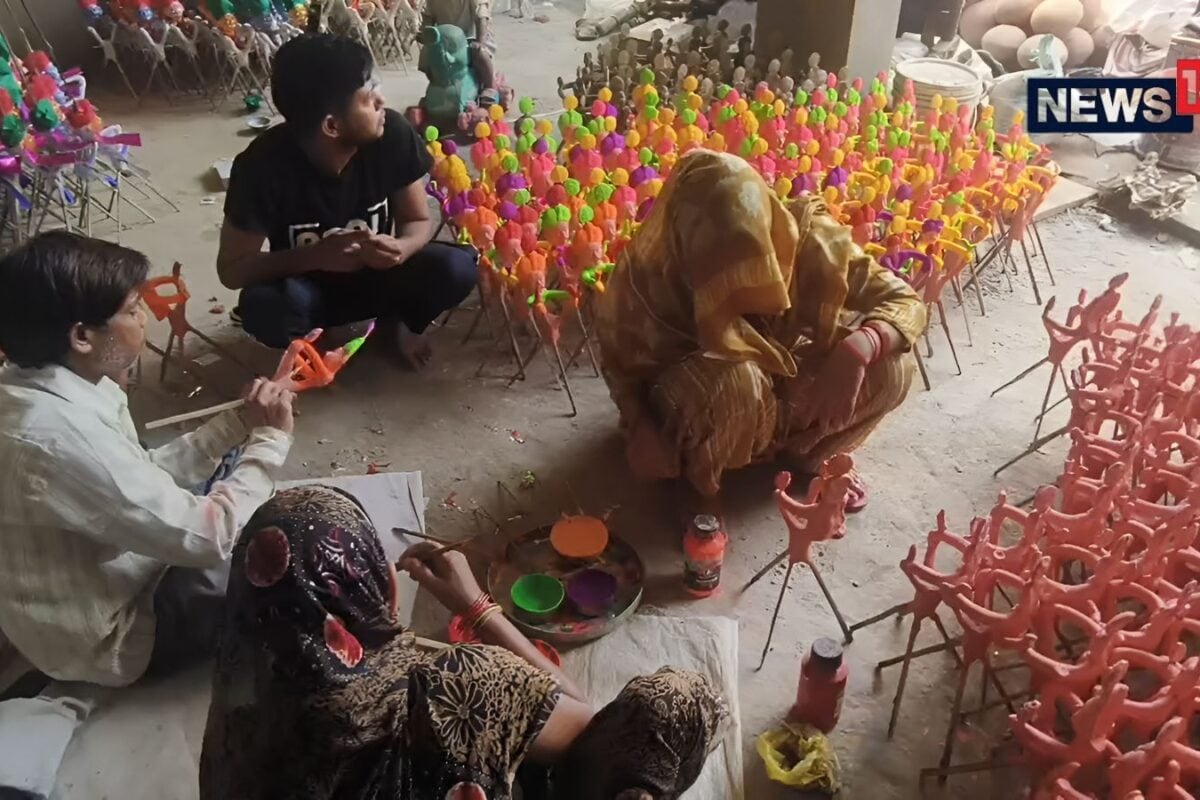
Dholpur and the wider Braj region have once again transformed into a vibrant cultural canvas as the much-anticipated Tesu-Jhanjhi festival officially commenced. This five-day folk celebration, deeply rooted in the ancient traditions of the region, marks a period of immense enthusiasm among children and traditional artisans alike. The festivities, which run continuously until the auspicious day of Kartik Purnima, bring the historical lanes and local marketplaces to life with the traditional sale and display of handcrafted Tesu and Jhanjhi figures.
Delving into the historical bedrock of this celebration, the festival draws its origins directly from the epic era of the Mahabharata. According to local folklore and age-old traditions, the festival symbolizes the poignant and incomplete love story characterized by sorrow and separation between the valiant warrior Barbarik and his beloved Jhanjhi. Passed down through generations through oral histories and community rituals, this narrative has transcended centuries to become an indispensable pillar of indigenous cultural expression in Dholpur and neighboring districts.
Examining the ground reality in local marketplaces across Dholpur, specialized vendors have set up traditional stalls offering intricately crafted idols of Tesu and Jhanjhi. Despite the overwhelming influence of modern digital entertainment, young children continue to display profound excitement and active participation in the age-old rituals associated with the festival. The local economy experiences a modest yet significant seasonal boost as artisans who spend weeks preparing these clay and wooden effigies finally bring their craftsmanship to the public sphere for traditional purchase and worship.
Community elders, cultural custodians, and local merchants emphasize the immense psychological and sociological significance of preserving such indigenous practices. While acknowledging the rapid modernization sweeping across urban and rural settlements, community leaders point out that events like the Tesu-Jhanjhi festival serve as vital anchors maintaining social cohesion and intergenerational continuity. The active involvement of younger demographics reassures cultural preservationists that ancient folklore retains its enduring relevance.
The cultural resonance of the festival extends far beyond immediate commercial transactions, serving as a unifying force for households across the Braj region. Families gather each evening during this five-day period to engage in traditional songs, storytelling, and community prayers that recount the legendary saga of Barbarik and Jhanjhi. This shared cultural participation fosters a deep sense of regional identity and collective pride among residents of Dholpur.
Local cultural departments and civic organizations maintain a supportive stance toward indigenous celebrations, recognizing their role in sustaining traditional handicrafts and folk artistry. Although the festival operates largely as a self-sustaining community tradition driven by grassroots enthusiasm, local authorities ensure adequate civic management in crowded marketplaces where seasonal buying and selling reach their peak ahead of Kartik Purnima.
As the five-day observance progresses toward its culmination on Kartik Purnima, public expectations remain high for continued community engagement and joyful participation. The successful continuation of the Tesu-Jhanjhi festival in Dholpur stands as a testament to the resilience of folk traditions, proving that deeply cherished historical narratives can successfully thrive alongside the rapid advancements of the modern world.
