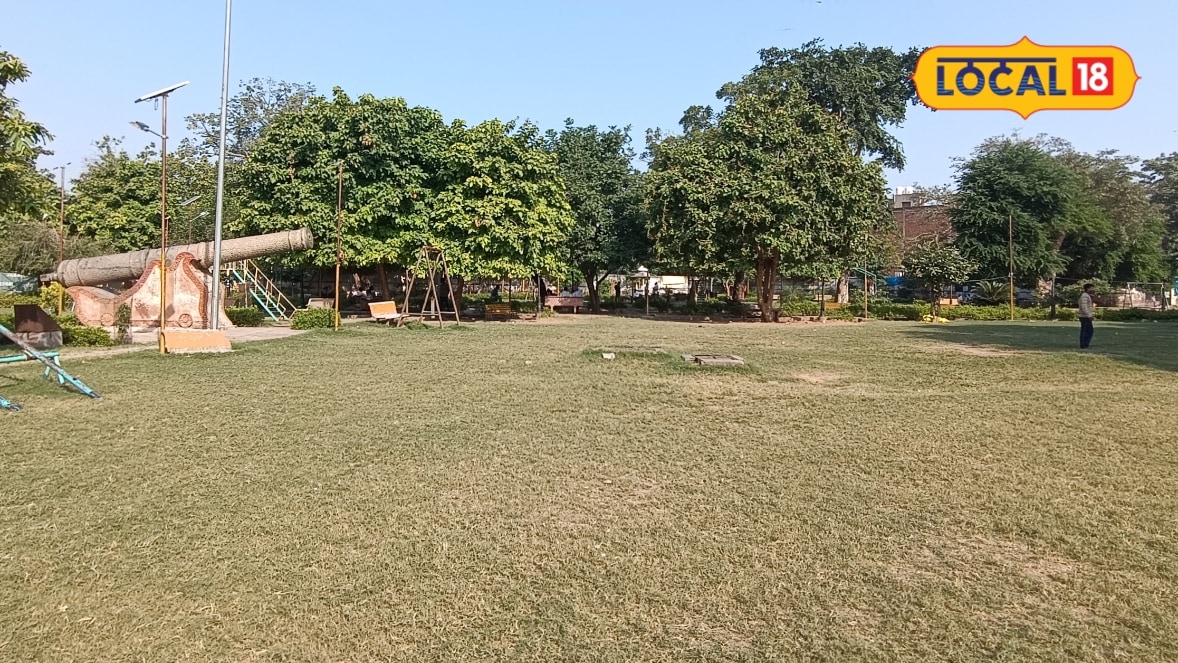
The integrated historical park located in Dholpur, Rajasthan, stands today as a profound and tangible witness to the monumental transition of the nation from an era of absolute monarchy to a functioning democracy. Situated prominently right opposite the historic Raj Niwas Palace, this expansive public space captures the dual essence of royal architectural grandeur and the solemn remembrance of India's freedom struggle. Over successive decades, the site has transformed significantly, evolving from distinct fragmented zones into a unified public landmark that continually reminds visitors of the sacrifices and political evolution that shaped the modern Indian republic.
Historically, the park was not always a singular unified entity as it is observed today by residents and visitors. In earlier decades, the grounds were distinctly demarcated and compartmentalized into three separate entities known respectively as Jawahar Park, Gandhi Park, and Subhash Park, named to honor the towering stalwarts of the Indian independence movement. Administrative restructuring and urban planning initiatives eventually merged these three distinct zones into a single integrated municipal park. Despite this administrative consolidation, the deep-rooted historical designations and the profound collective memory associated with the founding figures of the nation remain intensely alive within the local consciousness.
Among its most sacred historical associations, the park holds a revered place in the annals of the Indian independence movement because the mortal remains, specifically the asthi kalash, of Mahatma Gandhi were placed here. Historical records and local documentation substantiate that the sacred urn containing the ashes of Mahatma Gandhi was kept within the boundaries of this park for a continuous duration of 13 days. This solemn event cemented the identity of the grounds as a focal point for national mourning and reverence, prompting the municipality and the citizenry to subsequently emphasize the Gandhi Park nomenclature alongside its broader historical identity.
Beyond its deep association with the Father of the Nation, the park serves as an open-air museum preserving artifacts from the princely state era of Dholpur. Most notable among these surviving antiquities is the heavily constructed royal-era water cannon, locally referred to as the jaldar top, which still stands firmly in its original location today. This artillery piece offers tangible material evidence of the military technology and tactical arrangements utilized by the erstwhile rulers, providing researchers, historians, and tourists with a direct physical connection to the geopolitical realities of the princely state period prior to integration into the Indian Union.
In contemporary daily life, the sprawling park has seamlessly transitioned from a historical archive into an indispensable hub for community engagement, routine physical wellness, and social gatherings. Every single day, hundreds of local residents utilize the shaded pathways and verdant lawns for morning walks, physical exercises, and recreational relaxation for children. Furthermore, various local socio-cultural organizations frequently utilize the premises for public gatherings, cultural celebrations, and civic awareness events, making the park a dynamic and vibrant core of urban social interaction in Dholpur.
Despite its immense historical significance and high daily utility for the local populace, the park currently faces notable challenges regarding structural preservation, aesthetic upkeep, and infrastructural maintenance. Local historians, heritage conservationists, and concerned citizens have repeatedly expressed deep apprehension over the gradual wear and tear affecting the historical antiquities, including the royal water cannon and aging pathways. Consequently, prominent community voices and heritage advocates are mounting sustained appeals directed at municipal and district authorities to formulate dedicated preservation protocols and allocate sufficient developmental funds for the comprehensive restoration of the park.
Looking forward, the public expectation centers heavily on proactive administrative intervention to rescue this vital historical landmark from infrastructural neglect and environmental degradation. Stakeholders are eagerly anticipating a formal blueprint from the district administration and municipal corporation aimed at comprehensive landscaping, enhanced security measures for the heritage artifacts, and the installation of informative plaques detailing the 13 days when Mahatma Gandhi's asthi kalash rested on these grounds. Implementing these restorative measures will not only honor the glorious past of Dholpur but will also educate upcoming generations regarding the foundational pillars of Indian democracy and freedom.