
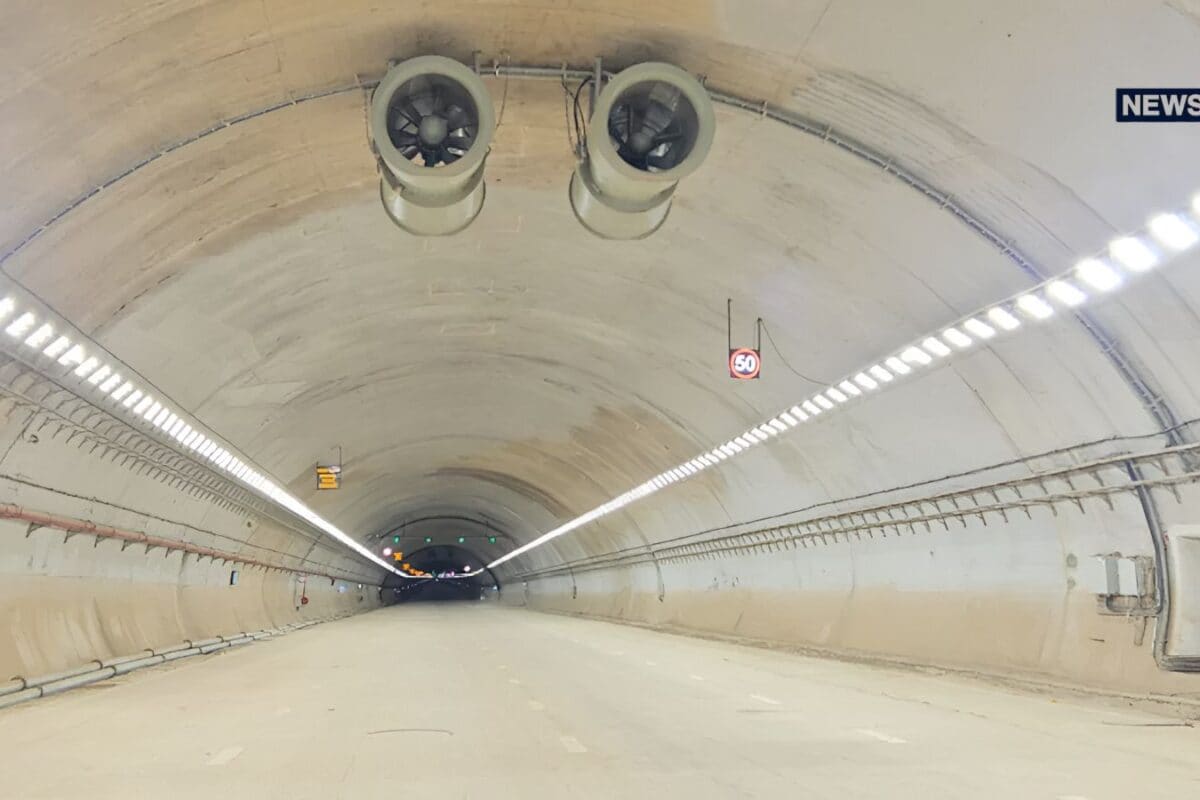
In a significant developmental leap for India's modern infrastructure, trial operations for vehicular movement have officially commenced across both tubes of the newly constructed tunnel situated within the ecologically sensitive Mukundra Tiger Reserve along the Delhi-Mumbai Expressway in Kota district. This ambitious engineering marvel, built at an estimated cost of 1250 crore rupees, represents a critical link in streamlining national logistics and improving inter-state connectivity across western and northern India.
The conceptualization and construction of this massive underground thoroughfare arose from the imperative need to bypass difficult terrain while strictly preserving the delicate ecological balance of the Mukundra Tiger Reserve. Traditional highway alignments through such dense forest habitats often present severe environmental challenges, prompting engineers and planners to deploy advanced tunneling methodologies that mitigate wildlife disruption while guaranteeing high-speed, unhindered vehicular transit.
At the heart of this mega-project lie two meticulously engineered tubes, designed to segregate traffic flow and maximize highway safety. With the recent initiation of vehicle trials in the second tube following the successful initial testing of the first tube, the entire dual-tube infrastructure is now undergoing rigorous evaluation. Financial stakeholders and civil engineers have closely monitored the 1250 crore rupee investment to ensure that structural integrity matches international safety compliance frameworks.
Transportation authorities, civil administration officials, and logistics operators have expressed optimism regarding the logistical implications of this dual-tube trial phase. Initial feedback from commercial transporters and private motorists using the corridor highlights a remarkable reduction in travel anxiety and transit duration. Furthermore, to encourage public participation and facilitate seamless initial navigation, administrators have confirmed that no toll tax is being levied on drivers during these formative trial days.
The broader regional implications for commercial trade and passenger mobility are profound, extending far beyond the immediate boundaries of Kota district. By bridging complex geographical gaps between Rajasthan and Gujarat, the Delhi-Mumbai Expressway project—anchored by strategic segments like the Mukundra Tunnel—promises to stimulate localized economic growth, optimize supply chain efficiency, and substantially reduce fuel consumption for long-haul freight carriers.
Administrative oversight remains stringent as safety auditors and environmental experts continuously inspect the infrastructural parameters of both tunnel tubes. Comprehensive emergency response protocols, sophisticated ventilation systems, and high-resolution surveillance networks are being meticulously tested under live traffic conditions to guarantee absolute passenger security before permanent commercial operations are formally inaugurated.
Looking ahead, the successful conclusion of these rigorous trials is expected to pave the way for the full-fledged, permanent commissioning of the Mukundra Tunnel section of the Delhi-Mumbai Expressway. Commuters and transport associations eagerly anticipate the official schedule for toll implementation and permanent operational handover, which will definitively cement this route as a cornerstone of India's evolving transportation network.