
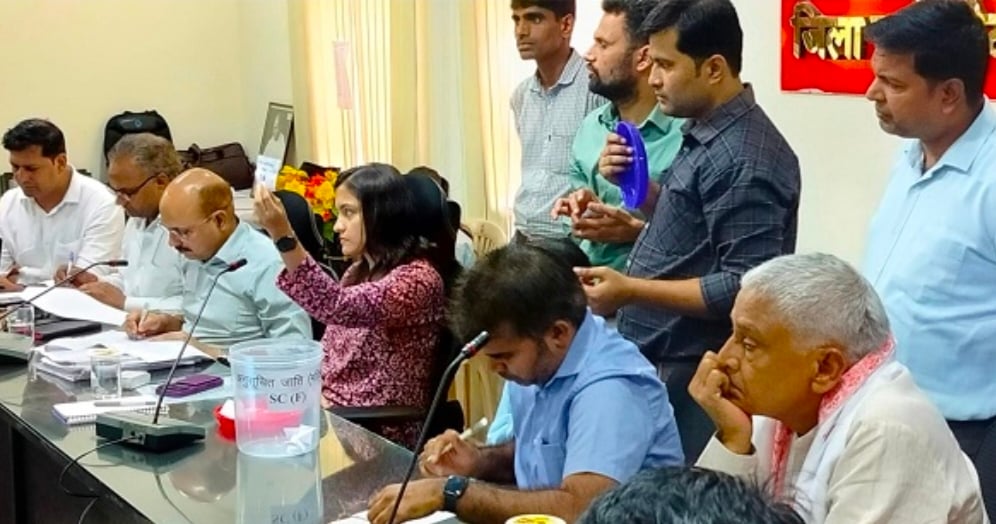
The political landscape in Dausa has witnessed a profound transformation following the official announcement of the reservation lottery for the upcoming Panchayati Raj elections scheduled for 2026. This crucial administrative development has immediately upended long-standing calculations, throwing seasoned political veterans and aspiring candidates into a state of intense re-evaluation regarding their electoral strategies and constituency choices.
Historically, the announcement of reservation draws in local self-government institutions serves as the foundational bell for intense grassroots political mobilization across rural districts. The intricate mechanism of rotation and reservation ensures compliance with statutory mandates aimed at fostering inclusive representation, yet it invariably disrupts established power structures and long-nurtured political bastions within the region.
A meticulous examination of the newly released administrative figures reveals that out of the total district council or Zila Parishad wards, precisely 37 wards form the primary battleground, within which 15 wards have been officially designated and reserved exclusively for women candidates. Concurrently, the reservation status for the chairperson positions across 14 Panchayat Samitis has been firmly finalized, sending ripples through local party cadres.
Political analysts, local party functionaries, and veteran observers have noted that this sweeping reallocation has caught numerous prominent figures completely unawares. Leaders who spent years cultivating specific rural pockets now find themselves forced to either seek alternative seats, navigate complex coalition dynamics, or step aside to make way for mandated demographic representations within their respective political platforms.
Beyond the immediate political maneuvers, these sweeping structural shifts carry profound implications for rural governance, grassroots democracy, and local socio-economic development priorities within the broader region. Communities and local stakeholders are keenly observing how these altered power equations will eventually influence developmental fund allocations, infrastructure projects, and administrative accountability at the village and block levels.
District administrative authorities have maintained strict neutrality and transparency throughout the entire lottery execution process, ensuring adherence to all prescribed legal frameworks and state guidelines. Officials have emphasized that the meticulous completion of this vital phase marks an essential stepping stone toward the seamless, peaceful, and democratic execution of the forthcoming local body elections.
Looking ahead, the political parties and independent aspirants are swiftly recalibrating their organizational machinery to adapt to the new realities imposed by the 2026 reservation framework. As campaign strategies intensify and ticket distribution negotiations gather momentum, the electorate prepares for a uniquely competitive electoral cycle that promises to redefine local leadership paradigms across Dausa.