
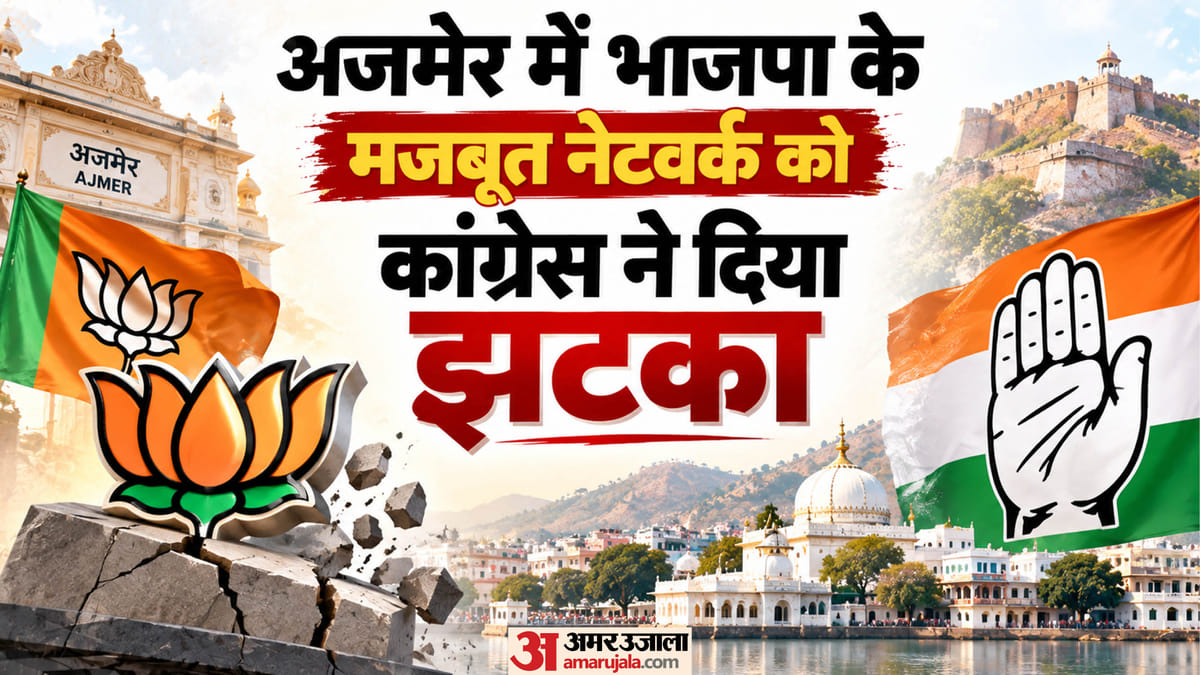
In a dramatic reversal of a three‑decade‑long political pattern, the Indian National Congress emerged as the single largest party in the Ajmer Municipal Corporation election, winning 37 of the 80 wards contested. The Bharatiya Janata Party, which has dominated the city’s civic politics for the past 36 years, secured only 32 seats, while independent candidates captured the remaining 11. The result was declared on the night of the counting, sending shockwaves through the state’s political establishment and prompting immediate speculation about coalition possibilities.
Ajmer, a historic city in Rajasthan, has been a stronghold of the BJP since the early 1990s, when the party first captured a majority of municipal wards and subsequently retained control through successive elections. The Congress, once a formidable opponent in the region, gradually lost its urban base, culminating in a 36‑year period without a single ward victory in the municipal arena. Analysts attribute the recent shift to a combination of anti‑incumbency sentiment, local grievances over water supply and waste management, and a concerted grassroots campaign by Congress workers who revived traditional door‑to‑door outreach.
The final tally underscores the tight nature of the contest. Congress’s 37 wards place it four seats shy of the 41‑seat majority required to govern unilaterally. The BJP’s 32 seats, while a sharp decline from its historical averages, still represent a substantial bloc. The 11 independents, many of whom are local businessmen or community leaders, now hold the balance of power. Their collective bargaining position will likely determine whether Congress can form a governing coalition, whether the BJP can muster a minority administration, or whether a mixed‑party council will emerge.
Stakeholder reactions have been swift and varied. “We have waited for a change that reflects the everyday struggles of our neighbourhoods,” said a senior Congress worker from the Ajmer North ward, who asked to remain unnamed. A veteran BJP councillor, speaking on condition of anonymity, described the result as “a wake‑up call” and urged the party to re‑evaluate its urban strategy. Independent candidate Mahesh Singh, who won the Bijainagar ward, emphasized the responsibility that comes with his pivotal role: “My constituents expect development, not political games. I will support the side that delivers concrete services.” Residents across the city expressed optimism, hoping that the new composition will accelerate stalled projects such as the riverfront rejuvenation and the expansion of solid‑waste processing facilities.
The outcome also bears significance for the neighboring Kotputli‑Behror district, which shares economic and commuting ties with Ajmer. Traders from Kotputli have long relied on Ajmer’s municipal services for market logistics, and any improvement in urban infrastructure could enhance supply‑chain efficiency. Moreover, the election result may influence the allocation of state‑level development funds, as the district’s representatives anticipate a more competitive environment for project approvals. Local agricultural producers, who transport produce through Ajmer’s road network, are watching closely for any policy shifts that could affect transport tariffs or road maintenance schedules.
In the immediate aftermath, the state’s Department of Urban Development has called for a meeting of all elected representatives to discuss the formation of the municipal board. The Governor’s office has issued a directive that the council must be constituted within ten days, emphasizing the need for a stable administration to address pressing civic issues. Both the Congress and BJP have signalled willingness to negotiate with independents, while the Election Commission has pledged to monitor the coalition talks to ensure compliance with electoral norms.
Looking ahead, the next few weeks will be crucial in shaping Ajmer’s governance trajectory. If Congress secures the backing of a majority of independents, it could appoint a mayor and initiate its promised agenda of improving water distribution, upgrading sanitation, and fostering heritage tourism. Conversely, a BJP‑led minority administration would need to seek issue‑based alliances, potentially leading to a fragmented policy environment. Citizens and business owners alike are awaiting the first council meeting, where budget allocations for the upcoming fiscal year will be debated, setting the tone for Ajmer’s development path until the next municipal election cycle.