
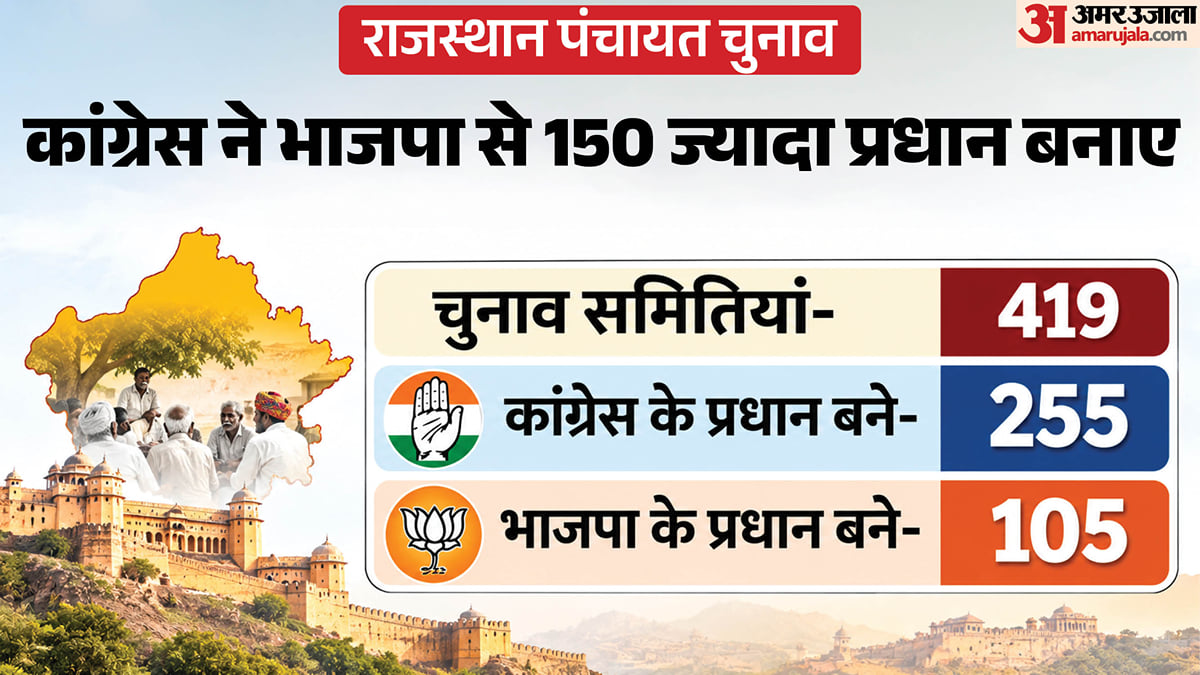
In a decisive political development across Rajasthan, the Indian National Congress has established an overwhelming dominance in the recent panchayat elections by securing 255 pradhan positions out of a total of 419 committees. This comprehensive mandate reflects a major grassroots resurgence for the ruling party, effectively neutralizing the challenge posed by the opposition Bharatiya Janata Party, which was heavily restricted across multiple rural districts during the intensely contested electoral battle.
The electoral contest unfolded against the backdrop of heightened political rivalry and intense campaigning across rural constituencies, where local governance bodies serve as the primary engine for village-level development and resource allocation. Historically, panchayat elections in Rajasthan have acted as a crucial barometer of public sentiment, directly influencing state-level politics and testing the administrative outreach of major political formations in rural heartlands.
According to the detailed statistical breakdown of the election results, the Congress party successfully maintained its dominance by leading decisively across 25 districts of the state. In several specific administrative zones, the electoral outcome was overwhelmingly one-sided, resulting in a virtual wipeout of the opposition. The scale of the victory underlines a coordinated electoral strategy and deeply entrenched local networks that favored the grand old party in these crucial rural administrative tiers.
Political analysts, local party functionaries, and administrative observers note that this grassroots victory provides the Congress party with a robust platform to implement rural welfare schemes directly through elected representatives. Village elders and local community leaders have expressed optimism that the newly elected pradhans will prioritize pressing developmental needs, ranging from rural infrastructure and drinking water supply to employment generation under social security programs.
The regional impact of this sweeping victory is particularly pronounced in districts like Kotputli-Behror and surrounding rural belts, where the overarching political wave has invigorated local party cadres and reshaped the local economic and administrative landscape. The strengthening of Congress leadership at the committee level is expected to streamline the execution of various state-sponsored developmental projects and enhance public service delivery to farming communities and rural households.
Administrative authorities have initiated the formal procedures for the swearing-in ceremonies and the assumption of office by the newly elected pradhans across the various district headquarters. Statutory oversight committees and election commission officials are ensuring a smooth transition of power, maintaining strict adherence to electoral guidelines and administrative protocols during the formation of the local government committees.
Looking ahead, the newly constituted panchayat committees face significant responsibilities in addressing local infrastructural deficits and managing rural development funds efficiently over their tenure. The public expectations from the 255 newly elected Congress pradhans remain exceptionally high, as citizens anticipate transparent governance, equitable resource distribution, and accelerated socio-economic progress across the rural districts of Rajasthan.
