A severe political storm has erupted within the Rajasthan Congress unit ahead of the upcoming panchayat elections, as internal dissent and mutual accusations among senior leaders spill into the open. The political friction, rooted in the dismal defeat suffered during the recent urban body elections, has found its epicenter in the eastern region of Rajasthan, specifically within the Bharatpur district. This renewed factionalism threatens to destabilize the party's grassroots preparations as political actors gear up for rural electoral battles.
The current phase of discord traces its origin to the recently concluded local body polls across various districts of Rajasthan. The electoral setbacks faced by the opposition party have triggered introspection among some leaders, while simultaneously sparking fierce blame games among others. Historically, eastern Rajasthan has been a crucial political battleground where internal cohesion is vital for electoral success. However, persistent factional alignments and grievances regarding ticket distribution and organizational management have repeatedly undermined the party's collective strength in the region.
The ground reality reflects deep-seated operational challenges within the party apparatus, particularly concerning coordination between district-level units and state leadership. While formal evaluations of electoral defeats generally require closed-door committee meetings, leaders have increasingly taken to public forums and social media handles to air their grievances. The absence of a unified strategy during the urban body elections severely impacted the party's electoral prospects in several key municipal wards across Bharatpur and Deeg, leaving party workers demoralized and anxious about the upcoming rural polls.
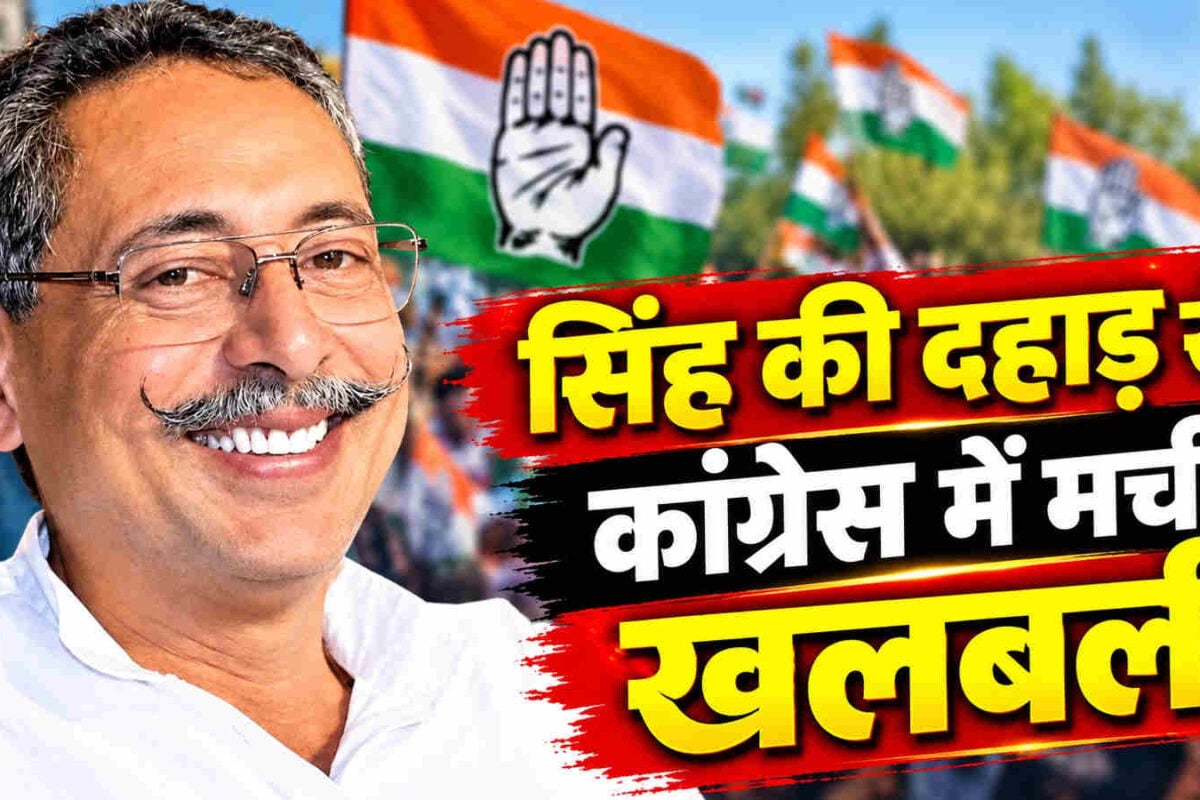
The crisis escalated significantly when senior Congress leader and prominent figure from eastern Rajasthan, former minister Vishvendra Singh, publicly questioned the competence and accountability of organizational office-bearers. Utilizing his official social media handle, Singh did not mince words as he assigned direct responsibility for the electoral debacle in Bharatpur and Deeg. By explicitly pointing fingers at both district presidents and state party chief Govind Singh Dotasra, Singh has brought institutional accountability to the forefront of internal party debates.
The ramifications of this public fallout extend far beyond the immediate boundaries of the Bharatpur and Deeg districts, casting a shadow over the broader regional dynamics of eastern Rajasthan. As local party cadres observe the widening rift between prominent leaders and the state organization, grassroots mobilization for the panchayat elections faces serious impediments. Factional loyalty is overshadowing collective electoral strategy, raising concerns among party supporters about the organization's ability to present a united front against political opponents in rural areas.
Looking ahead, the political landscape in Rajasthan remains highly volatile as the state braces for the crucial panchayat elections. The public airing of grievances by leaders like Vishvendra Singh underscores the fragility of party unity and the urgent need for comprehensive internal reconciliation. Whether the party leadership can successfully resolve these deep-seated differences and rebuild organizational synergy before heading into the rural polls will ultimately determine its electoral viability in the region.