
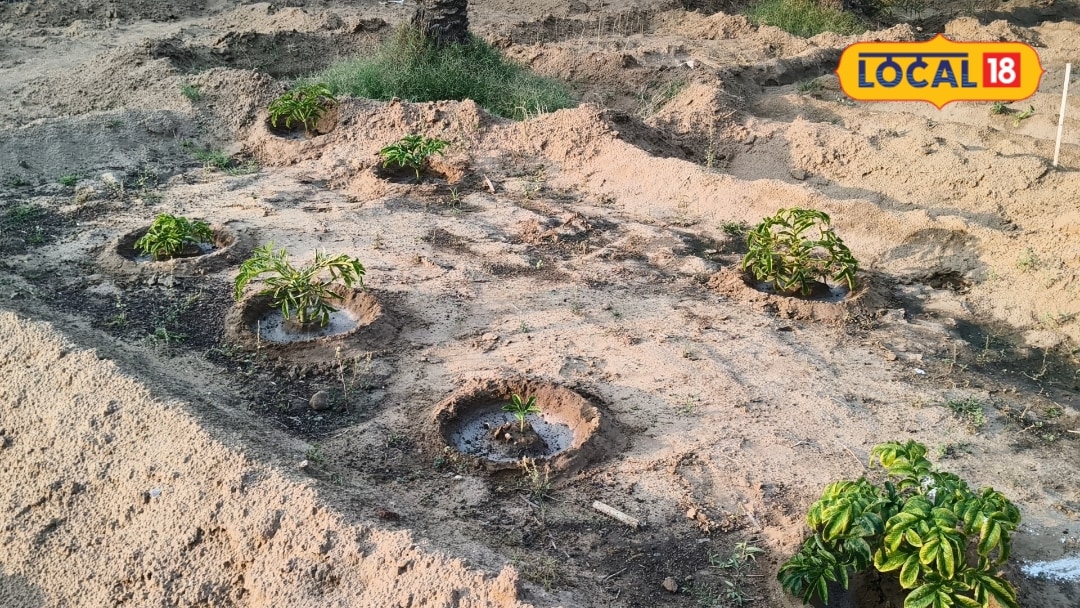
In a significant agricultural milestone for the arid landscape of Rajasthan, researchers and scientists at Swami Keshwanand Rajasthan Agricultural University in Bikaner have successfully initiated an unprecedented cultivation trial of suran, a notable medicinal tuber crop. Traditionally indigenous to regions boasting humid or subtropical environments such as southern Rajasthan and Bihar, suran is now being experimentally grown right in the middle of the Thar Desert's challenging climatic conditions. This novel initiative marks a paradigm shift in how regional farming experts view crop diversification in the desert districts of Rajasthan.
The conceptualization of this agricultural experiment stems from the imperative need to optimize available land and water resources beneath existing horticulture structures. Specifically, university scientists have utilized a 30-year-old established date palm orchard as the host environment for this intercropping strategy. By planting the tuber crop in the shaded and micro-climatically modified soil beneath these decades-old date palm trees, the research team aims to test whether extreme desert temperatures and dry winds can be successfully mitigated for sensitive subterranean crops.
Examining the ground realities and logistical frameworks of this undertaking, the planting material for the trial was specifically procured from Udaipur. Initial germination and vegetative phases have exhibited surprisingly high resilience, leading agricultural experts to report highly encouraging early observations. According to projected agronomic metrics, the entire cultivation cycle is slated to reach maturity within a span of 3 months. Furthermore, empirical estimates suggest an anticipated yield of approximately 4 to 5 kilograms of suran per individual plant, establishing a strong financial viability baseline.
The broader implications of this experimental farming technique extend deeply into the financial stability and economic empowerment of regional horticulturalists. For decades, orchard owners in Bikaner and surrounding areas of Rajasthan have relied solely on primary seasonal yields from mature trees. The introduction of suran as an intercrop beneath the 30-year-old date palm canopy provides these farming communities with a lucrative secondary revenue stream, mitigating financial risks associated with single-crop dependency in unpredictable weather patterns.
While this trial is centrally anchored in Bikaner, its methodological success holds profound potential for neighboring administrative divisions, including the developing agricultural corridors of Kotputli-Behror. As local farming communities across Rajasthan continuously seek drought-resilient intercropping models to maximize small landholdings, successful outcomes from Bikaner's university research labs offer a practical blueprint for rural economic diversification, improved soil nutrient utilization, and enhanced household incomes.
From an institutional governance perspective, the agricultural administration and university extension services are maintaining rigorous oversight of the crop's development phases. Senior agronomists and soil scientists are closely monitoring moisture retention, root development, and nutrient uptake beneath the date palm canopy. This methodical institutional approach ensures that every empirical data point regarding water efficiency and yield ratios is accurately recorded before the cultivation model is formally recommended to commercial cultivators.
Looking forward toward the culmination of the ongoing 3-month cultivation timeline, the agricultural community anticipates the formal harvest with great optimism. If the final yield verification confirms the projected 4 to 5 kilograms per plant, Swami Keshwanand Rajasthan Agricultural University plans to publish comprehensive cultivation guidelines. This future roadmap will empower farmers throughout Rajasthan and beyond to adopt suran intercropping, transforming traditional desert orchards into multi-layered engines of agricultural productivity.
