
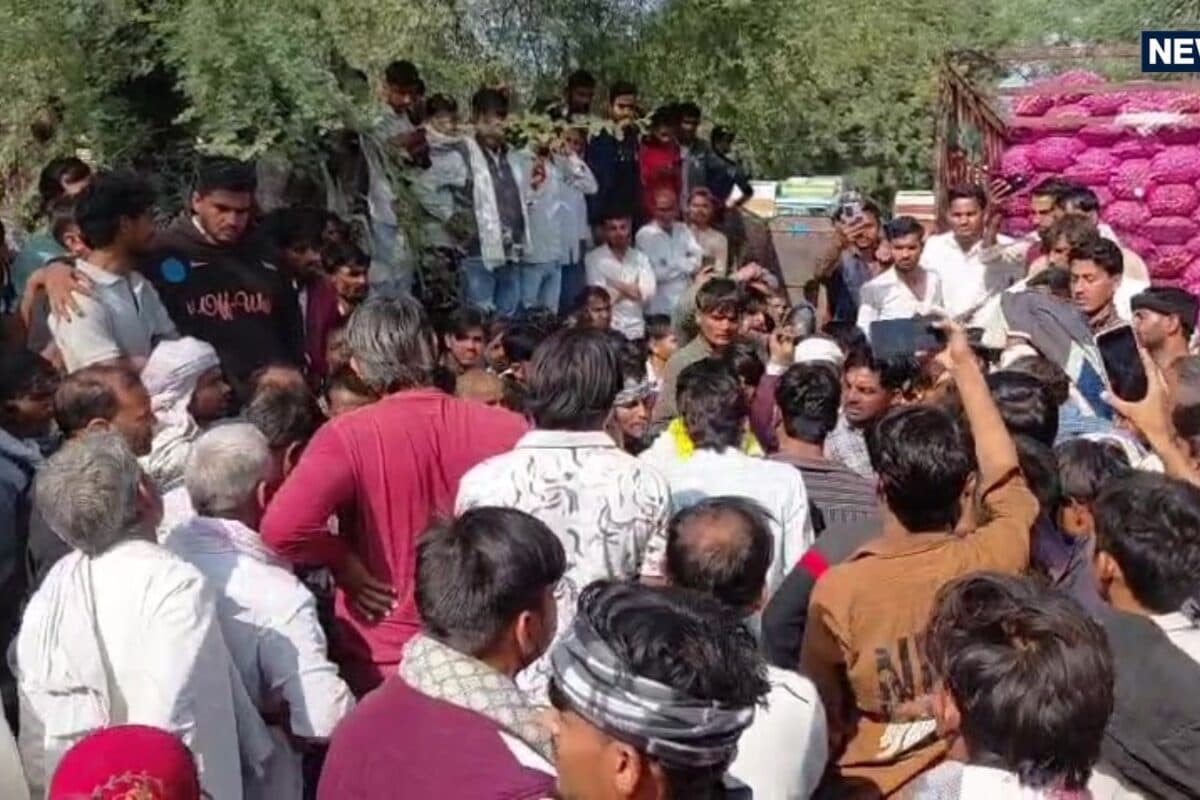
Tensions flared up significantly in the Alwar agricultural market on Friday as a steep crash in onion prices triggered widespread outrage among local cultivators. Frustrated by persistent market stagnation and diminishing returns on their hard-earned harvests, agricultural producers resorted to direct action by locking the main entrance of the mandi and staging a comprehensive roadblock. This disruptive demonstration effectively paralyzed commercial activities within the region, drawing immediate attention to the severe economic distress currently plaguing the rural farming community.
The root cause of this agrarian standoff lies in the widening chasm between escalating agricultural input costs and the abysmally low market valuations being offered for essential cash crops. Over recent harvesting cycles, the expenses associated with land preparation, quality seeds, fertilizers, irrigation, labor, and transportation have multiplied exponentially. However, instead of receiving remunerative returns that reflect these heavy investments, producers find themselves trapped in a cycle of market volatility where prevailing prices fail to cover even the basic cost of production.
Voicing their collective grievances, protesting representatives highlighted that the current financial realizations are utterly disproportionate to the immense physical labor and financial capital invested in cultivating the crop. Market participants, traders, and local cultivators engaged in intense verbal exchanges as the situation escalated near the premises. While traders pointed toward broader demand-supply dynamics and national market trends, the farming community stood resolute, emphasizing that survival is contingent upon fair pricing mechanisms rather than arbitrary market fluctuations dictated by middlemen.
The reverberations of this crisis extend far beyond the immediate boundaries of the market yard, carrying substantial economic implications for the entire region including neighboring districts like Kotputli-Behror. Agriculture serves as the foundational pillar of the local economy, and when primary producers face acute financial shortfalls, local commerce, retail trade, and rural credit systems experience a severe contraction. The cascading effect of depressed onion valuations threatens the purchasing power of rural families, thereby dampening overall economic momentum across the broader community.
In response to the mounting unrest, local administrative authorities and market committee officials faced intense pressure to initiate dialogue and restore normalcy within the commercial zone. Observers note that timely statutory oversight and structured market interventions are urgently required to stabilize commodity prices and prevent similar escalations. Stakeholders are closely monitoring whether administrative machinery will step in to provide necessary price support mechanisms or facilitate constructive negotiations between aggrieved cultivators and wholesale traders.
