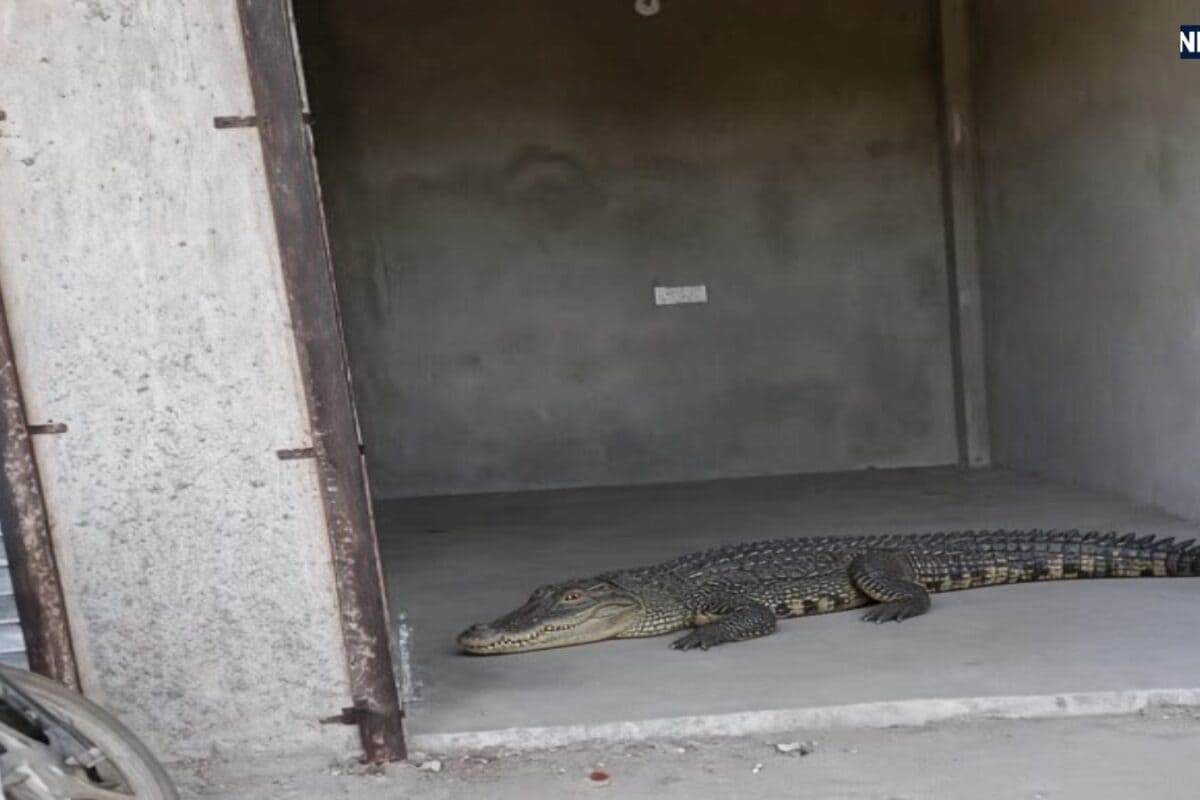
In an alarming incident that highlights the intensifying human-wildlife interface in the region, a massive crocodile walked into a newly constructed commercial establishment and concealed itself directly underneath the sleeping arrangements of five unsuspecting individuals. The extraordinary event unfolded during the night hours near the famous Siliserh Lake, specifically at the Bakhtpura Bawadi Stand situated within the newly built Chhabri Complex in Alwar. This shocking discovery has sent ripples of anxiety throughout the local trading community, emphasizing the persistent vulnerability of residential and commercial spaces encroaching upon natural aquatic habitats.
Geographically and environmentally, the surrounding region of Alwar, particularly areas adjacent to the extensive Siliserh Lake network, has long served as a natural habitat and transit corridor for diverse aquatic fauna, including marsh crocodiles. Seasonal variations, depletion of natural prey bases, and the continuous expansion of human settlements into traditional wildlife migratory routes frequently compel these apex predators to venture far beyond their designated water bodies in search of shelter or food. The latest episode at the Chhabri Complex underscores a systemic ecological challenge where rapid urbanization frequently intersects with the natural domains of predatory wildlife, raising critical questions regarding habitat preservation and perimeter safety.
The sequence of panic began when Charan Singh, one of the five individuals resting inside the commercial establishment, woke up and noticed unusual movement beneath his cot. Upon inspecting the shadows with cautious vigilance, he was confronted with the terrifying sight of a large crocodile resting comfortably under the wooden furniture. The sudden realization that five human beings were sleeping mere inches away from a dangerous predator sparked absolute pandemonium inside the enclosed space. The immediate threat level was critically high, demanding swift, calculated action from the occupants to prevent any catastrophic loss of life or severe physical injury before formal rescue teams could be notified.
Demonstrating immense courage and resourcefulness in the face of immediate peril, the gathered residents refused to panic passively and instead mobilized local tools to manage the crisis. Relying on sheer determination and makeshift equipment, particularly iron rods (sariye), the group engaged in a tense, prolonged struggle to corner, secure, and evict the reptile from the commercial premises. The logistical hurdles of handling a powerful, defensive wild animal within the confined boundaries of a shop floor made the rescue operation exceptionally perilous. Through cautious maneuvering and collective physical effort, the local populace successfully dragged the formidable creature out of the building without sustaining any injuries.
The broader implications of this wildlife intrusion resonate deeply across the Kotputli-Behror district and surrounding rural-urban peripheries, where local livelihoods, agricultural activities, and commercial enterprises constantly intersect with natural ecosystems. Incidents of this magnitude directly impact the psychological well-being of local merchants, small-business owners, and agrarian workers who operate near water bodies and forested belts. The recurring presence of large predators near human habitations necessitates enhanced community vigilance, robust infrastructural defenses, and greater awareness regarding wildlife behavior to safeguard human lives while ensuring ecological coexistence.
Despite the successful localized intervention executed by the residents, questions concerning the promptness and preparedness of formal administrative rescue mechanisms remain paramount. Incidents involving wild predators straying into commercial complexes highlight the necessity for designated rapid-response wildlife helplines and specialized district-level rescue squads that can reach remote locations instantly. While local citizens managed this crisis using basic instruments like iron rods, relying entirely on civilian intervention for apex predator rescue operations involves unacceptable safety risks that municipal authorities and forest departments must proactively address.
Following the successful extraction from the shop floor, the wildlife crisis concluded when the rescued crocodile was safely transported and released into an adjacent agricultural field leading back toward a secure aquatic environment. Moving forward, local community leaders, district authorities, and environmental experts must establish collaborative protocols to monitor wildlife movements near commercial hubs like the Chhabri Complex near Siliserh Lake. Preventive infrastructure, public education campaigns, and rapid administrative coordination will remain vital to ensure that future human-wildlife encounters are safely averted before turning life-threatening.